Fit sleeping mats to a tapered tent floor
Compare actual mat outlines with the narrow parts of a tent instead of relying on total floor area.
Updated:
Start with the shape at the narrow end
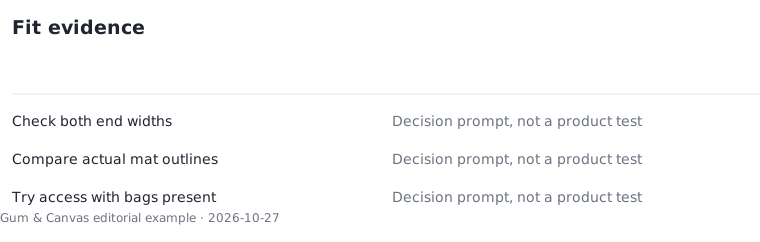
A rectangular width calculation can reject an obvious mismatch, but it cannot prove that mats fit a tapered tent. Identify which floor measurements describe the head end, foot end and usable length. Then compare them with the mat at corresponding points. Parks Victoria includes both a tent and a sleeping mat in its packing checklist, reviewed on 2026-10-27; choosing them as a compatible arrangement is the editorial problem addressed here. Do not infer usable dimensions from a photograph, person rating or total area alone. Use model drawings, actual measurements or a permitted physical trial to answer the geometry question.
Keep the complete outline in the comparison
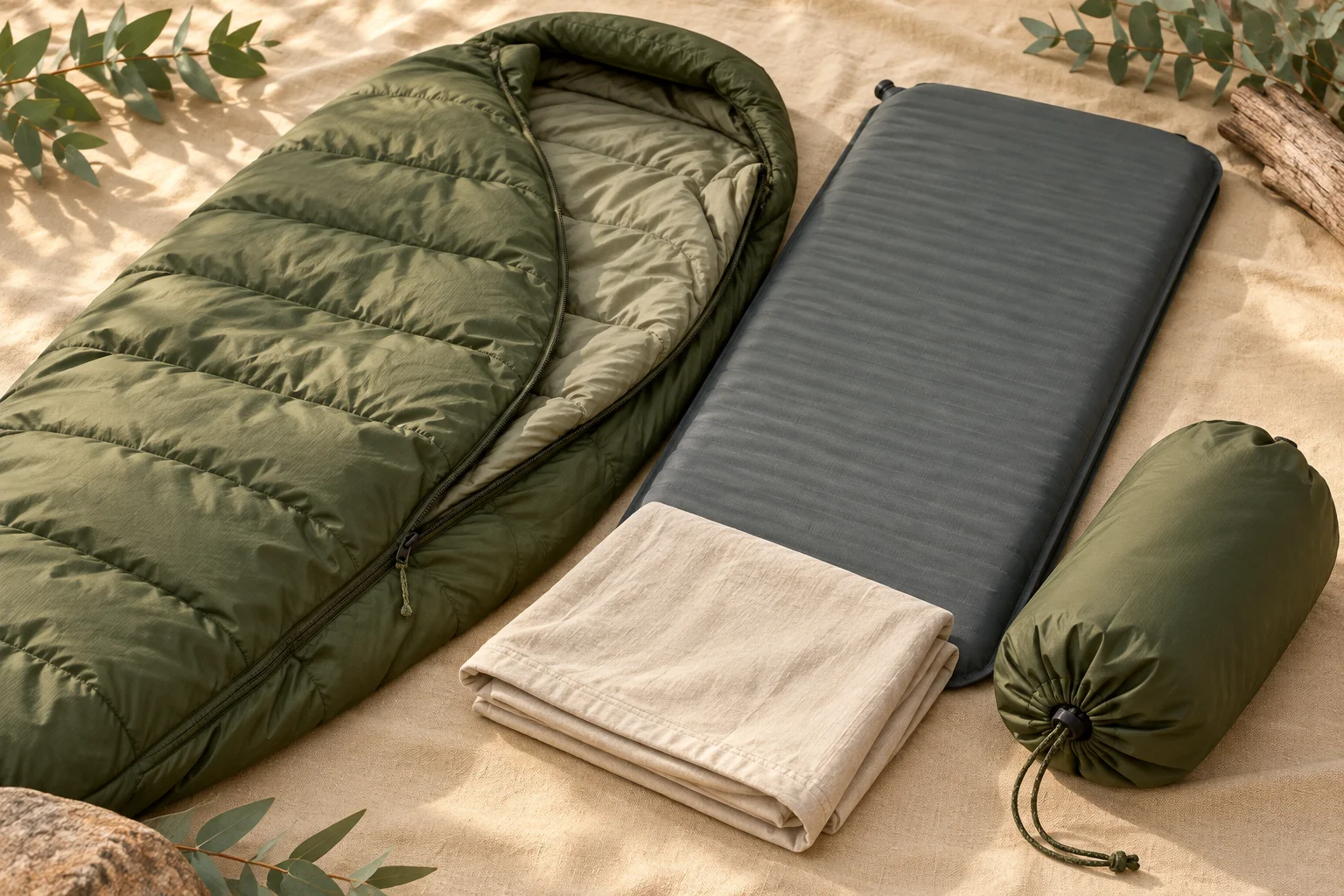
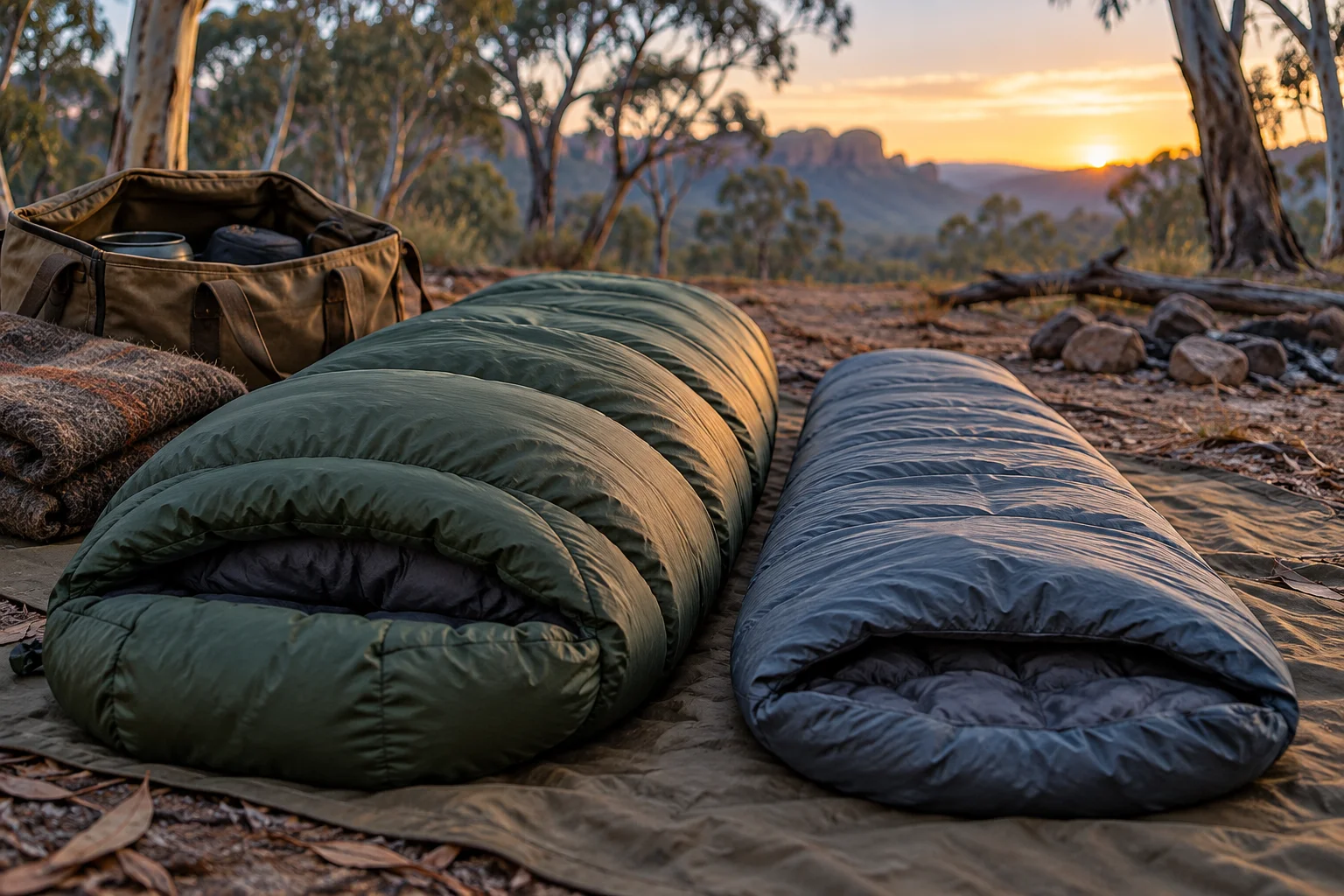
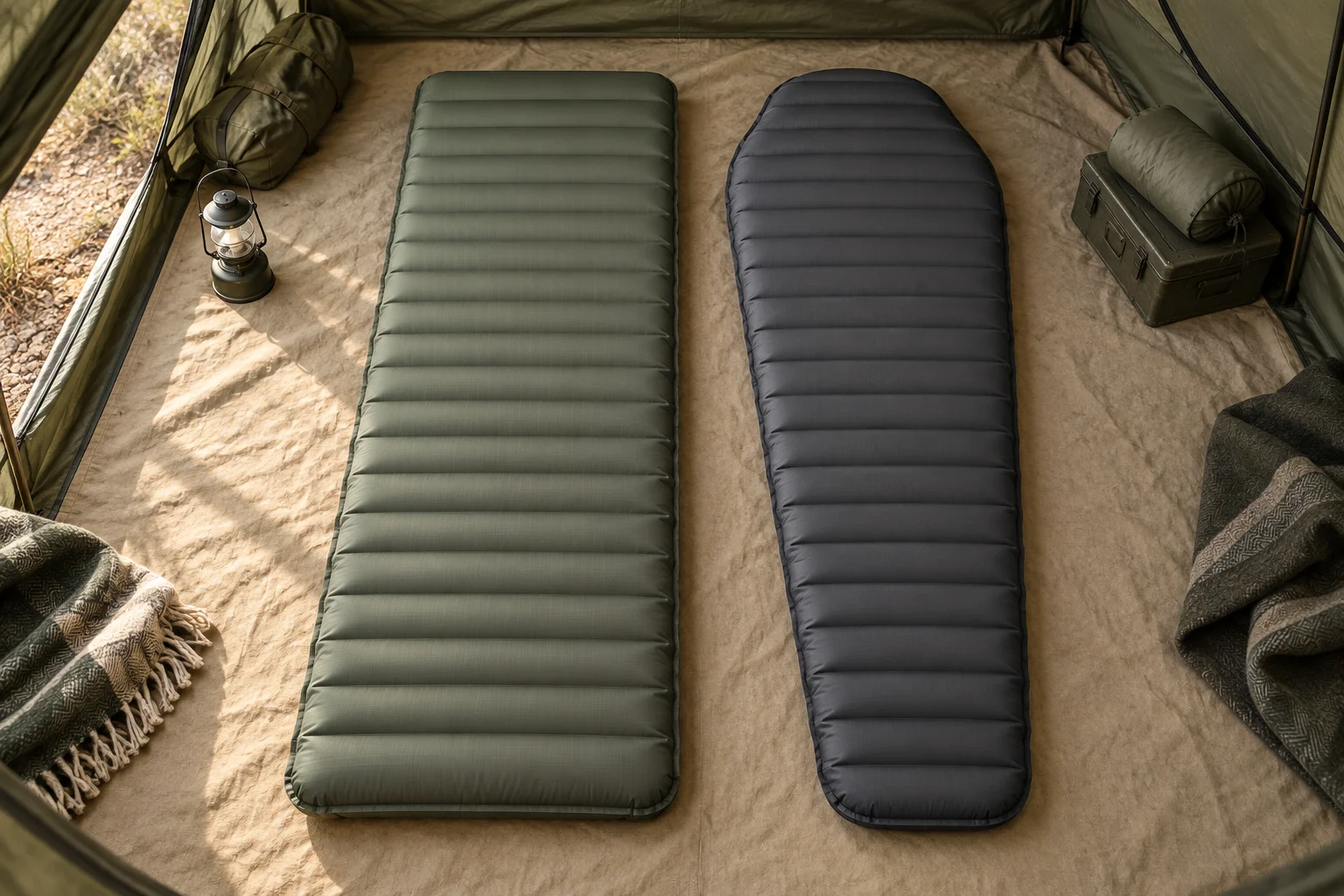
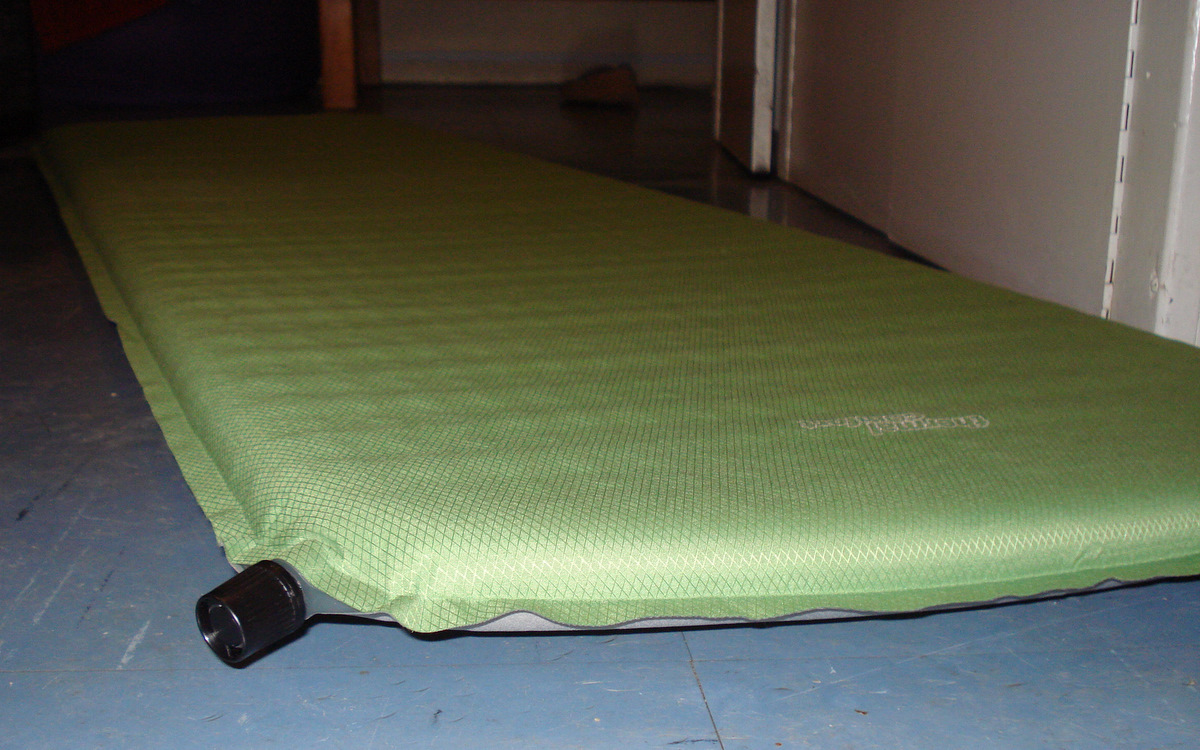
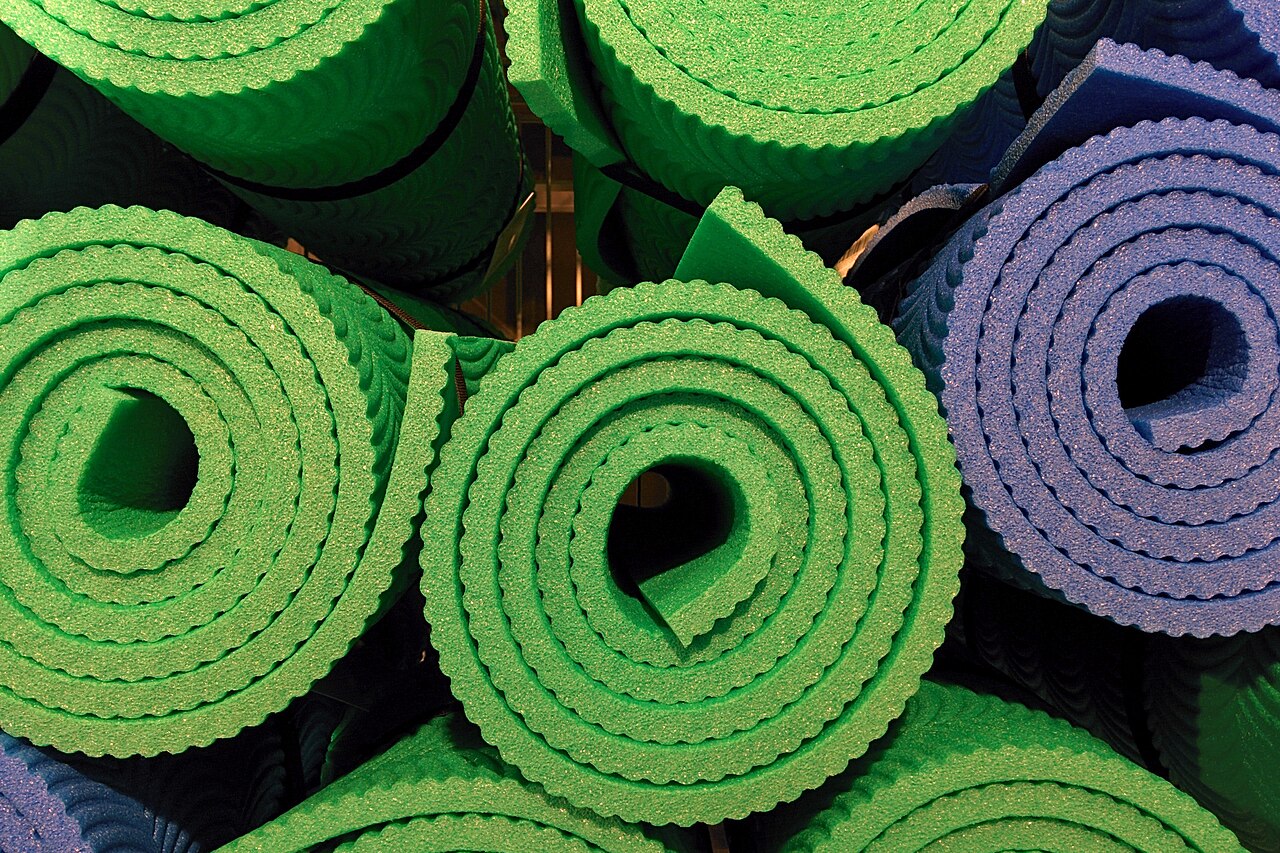
Two mats may have the same widest point while narrowing in different places. Draw the outline from the maker's dimensions, or lay the actual mats on the assembled floor without forcing the tent fabric. Record where shoulders, feet and valves sit. The close photograph of the self-inflating mat illustrates an edge and valve that need consideration beyond a single area number. A foam mat can have a different outline and storage method, as the rolled-mat photograph shows. Neither image supplies dimensions for your purchase; both explain why construction and usable shape must be checked for the exact model.
Use a narrow-end example to expose the mismatch
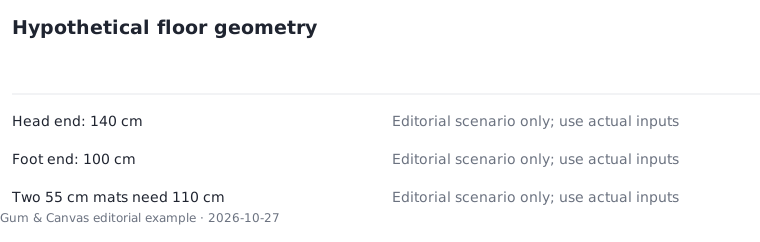
For a hypothetical tent, assume the head end is 140 cm wide and the foot end is 100 cm wide. Two rectangular mats, each 55 cm wide, require 110 cm across both ends. They fit the head-end width by arithmetic but exceed the assumed foot-end width by 10 cm. Overlapping or bending them is not evidence of a proper fit. A different tapered mat might change the result, but its actual outline must be known. For a group of 2 people, make 2 separate outline checks instead of treating an advertised two-person tent as a guarantee for any pair of mats.
Check length, access and the tent above the floor
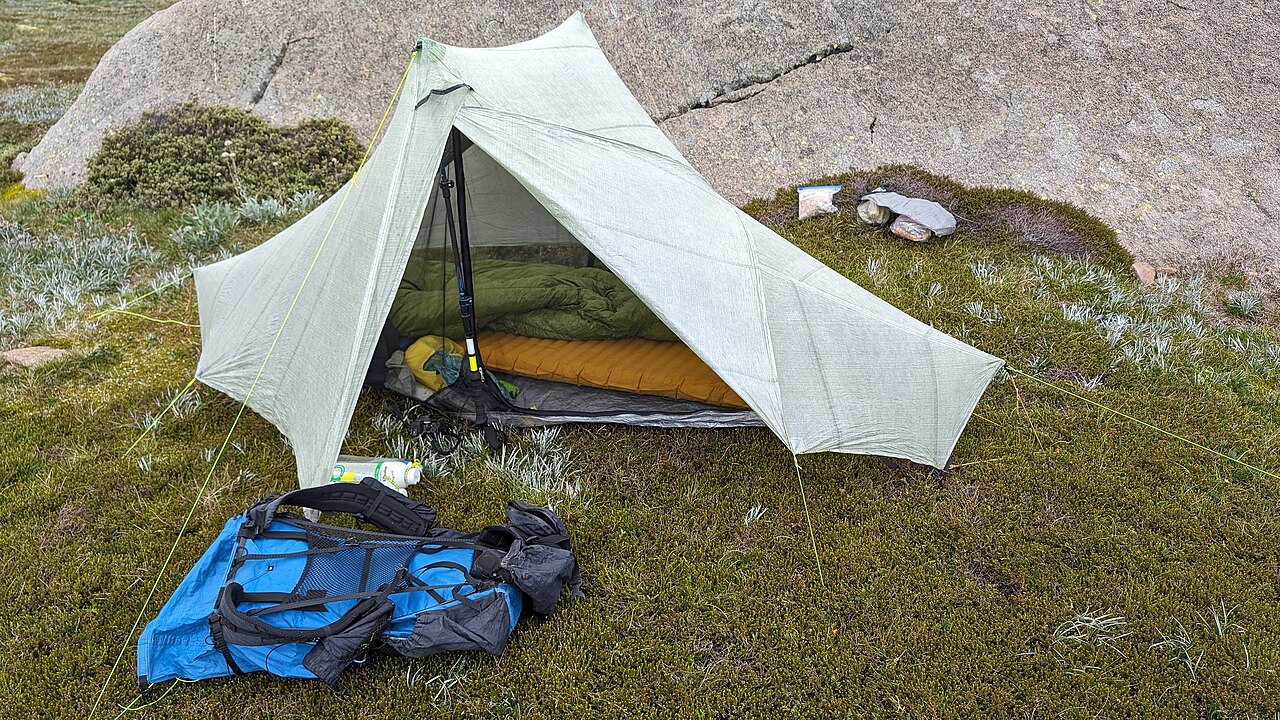
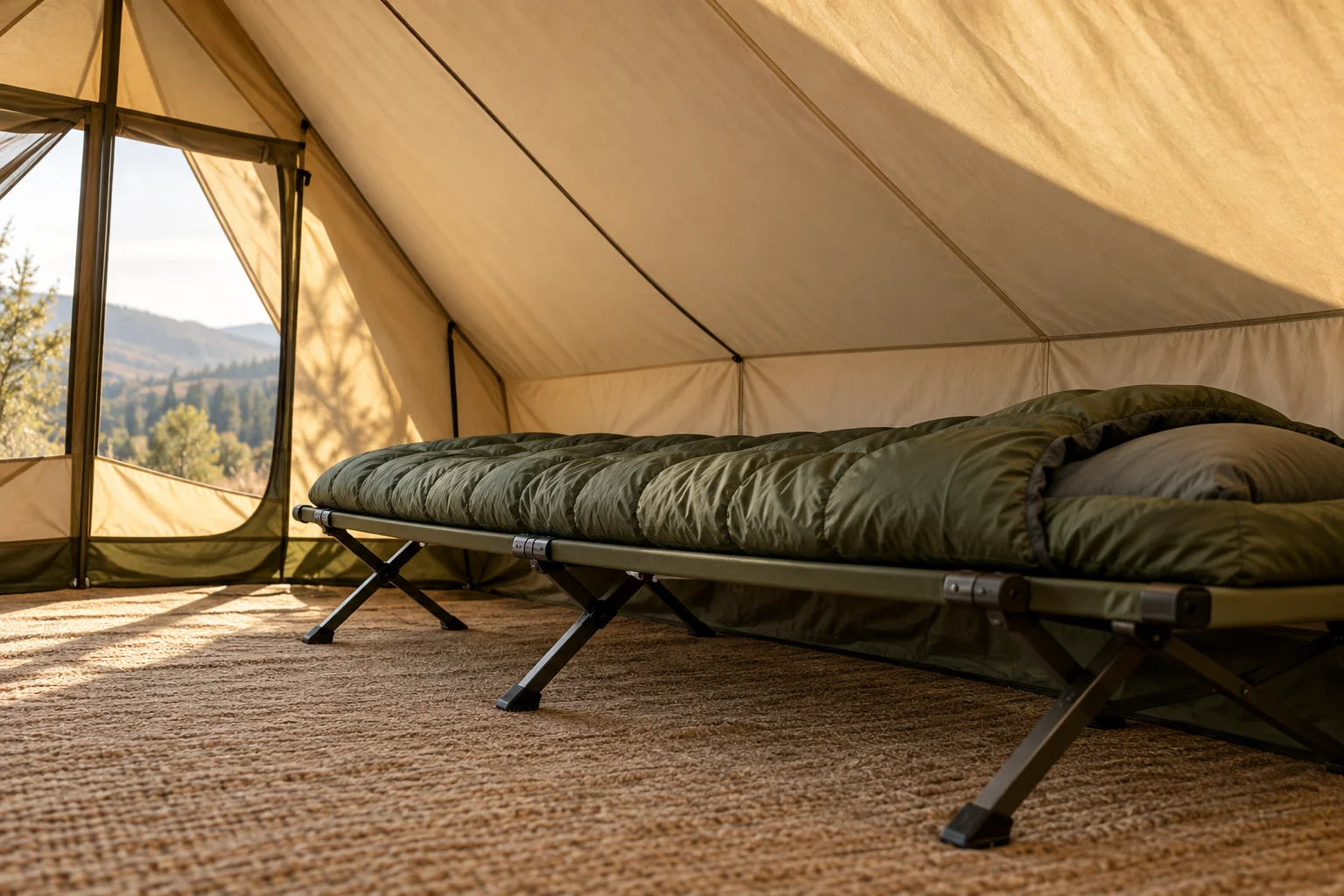
Floor coverage is only one part of the arrangement. Once the tent is assembled according to its instructions, check the entrance, stored bags and the sloping fabric above the sleepers. The campsite kit photograph makes the extra objects visible: a backpack does not disappear merely because the mats fit. A planning rehearsal might reserve 15 minutes for positioning and 10 minutes for ordinary entry and exit, giving 25 minutes in total. Those figures are illustrative time allocations. They are not a test result or evidence that every sleeping arrangement can be assessed in that time.
Keep a fit note with the final shortlist
Write down the tent model, mat models and the measurements or trial used. Mark any unknown outline or missing dimension explicitly, so a guessed value cannot silently become a purchasing fact. The rectangular tent-fit calculator on this site is useful for a first arithmetic check, but it does not model tapered floors, wall slopes, storage or comfort. If the narrow-end information is unavailable, ask the manufacturer or retailer before ordering. The decision you are making is whether the physical arrangement is plausible and verified, not whether the equipment will be suitable for all weather or provide a particular quality of sleep.