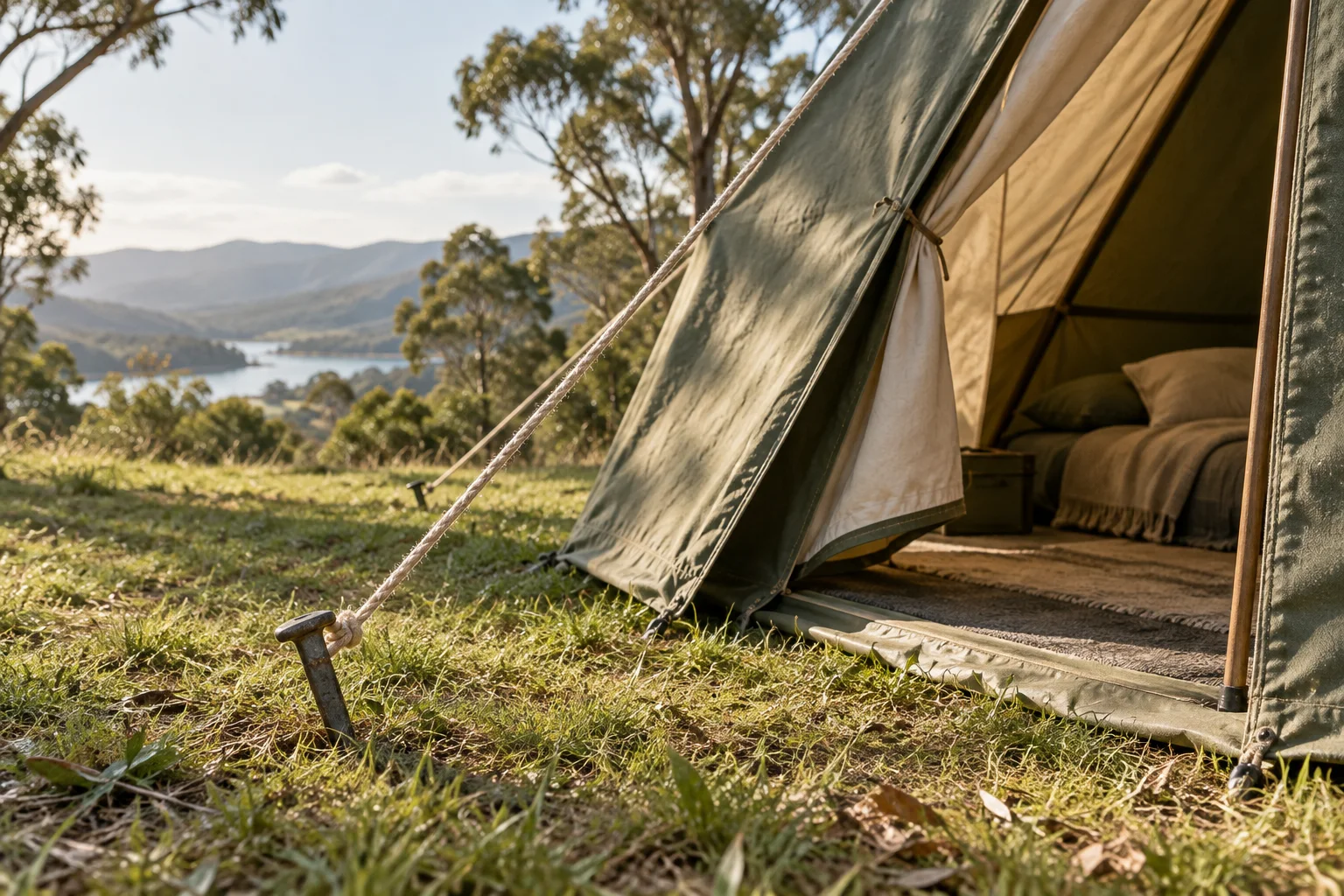
Work backwards from a daylight tent pitch
Make travel, setup and unresolved tasks visible in a planning schedule without promising an arrival time.
Updated:
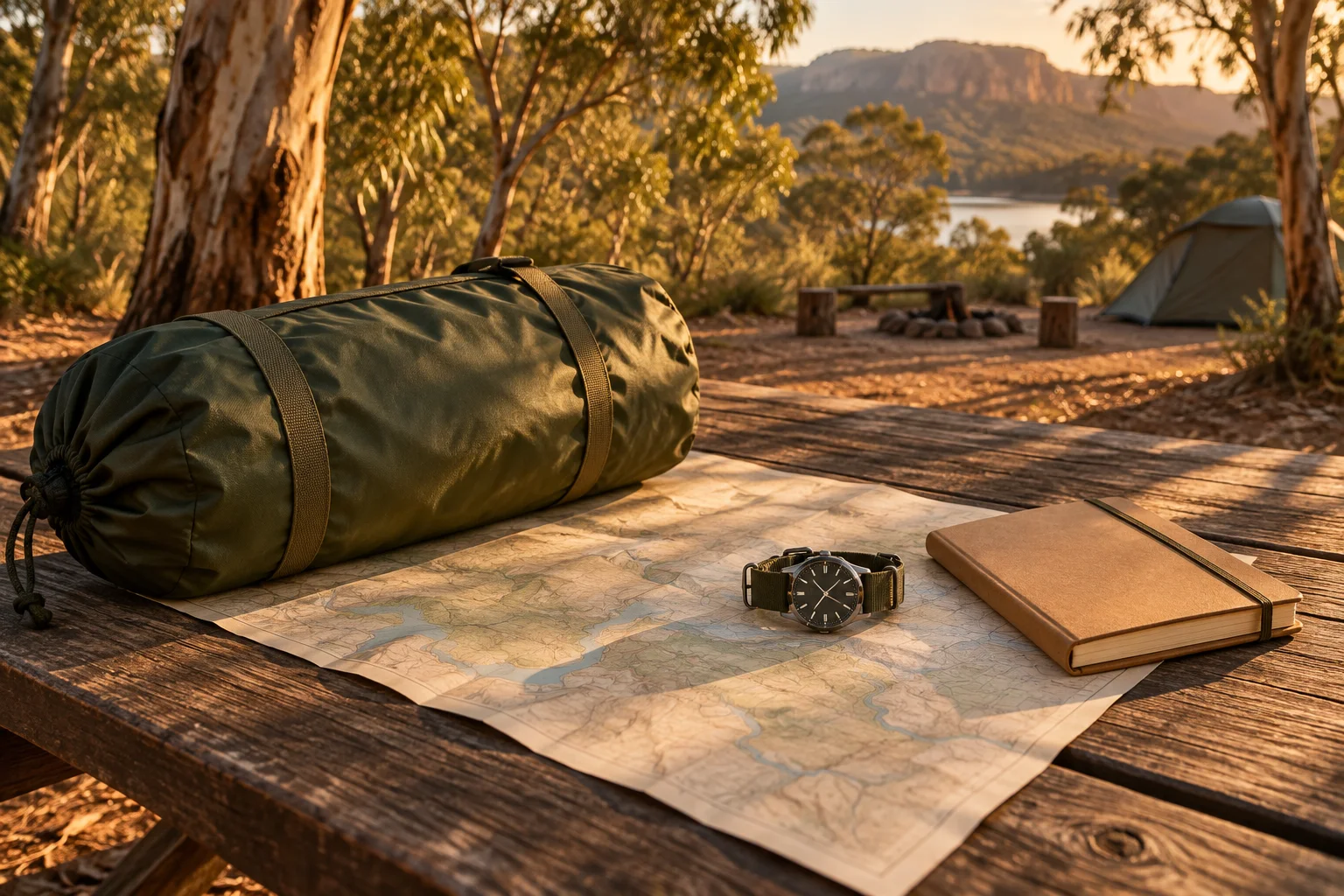
Choose a planning target from current local information
Parks Victoria recommends arriving with daylight for a first camping trip; its beginner guidance was reviewed on 2026-10-27. To apply that idea, obtain the relevant date and destination information and choose a realistic planning target for the work you need to complete. This article does not supply a sunset time or guarantee a safe arrival window. It presents a backwards-scheduling exercise using clearly hypothetical inputs. Weather, road access, booking conditions and individual needs can change the decision. A tidy timetable is useful only when its assumptions remain visible and the plan can change when those assumptions fail.
Separate arrival from being ready to settle in
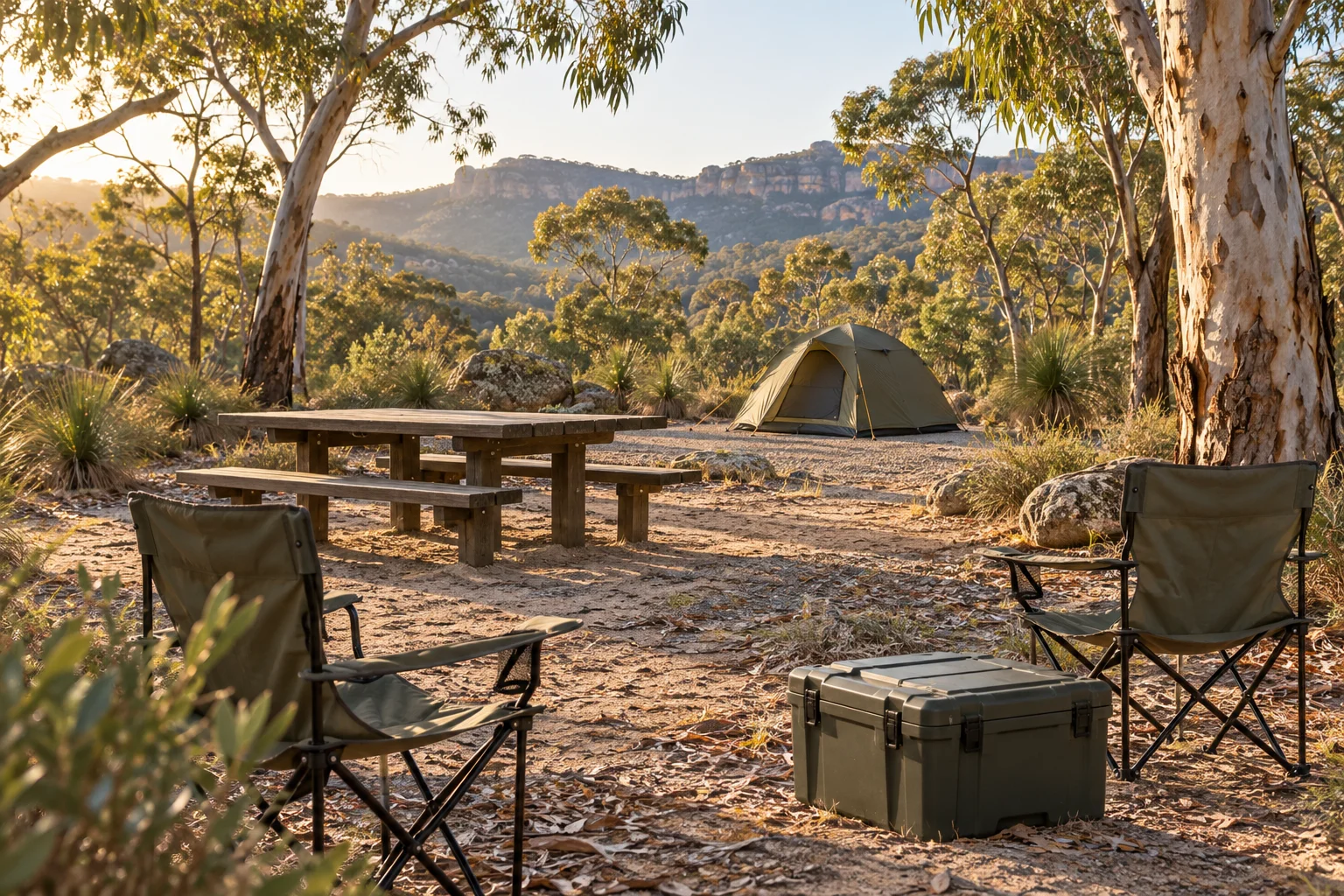
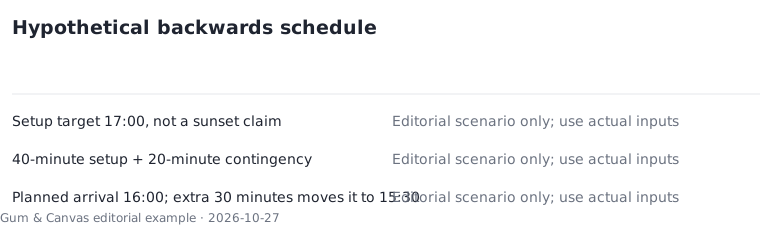
The family-tent photograph shows a completed campsite arrangement, but reaching the campground does not instantly produce that result. List the tasks between vehicle arrival and the point at which the essential equipment is correctly set up. Include the actual access and check-in arrangements described by the operator. Do not assume that the vehicle can park beside the pitch or that equipment can be unloaded wherever convenient. Use your own rehearsal notes for model-specific work, and keep them distinct from a retailer's setup claim. The sequence should reflect the actual booking and equipment rather than the appearance of a finished campsite.
Subtract a labelled hypothetical task budget
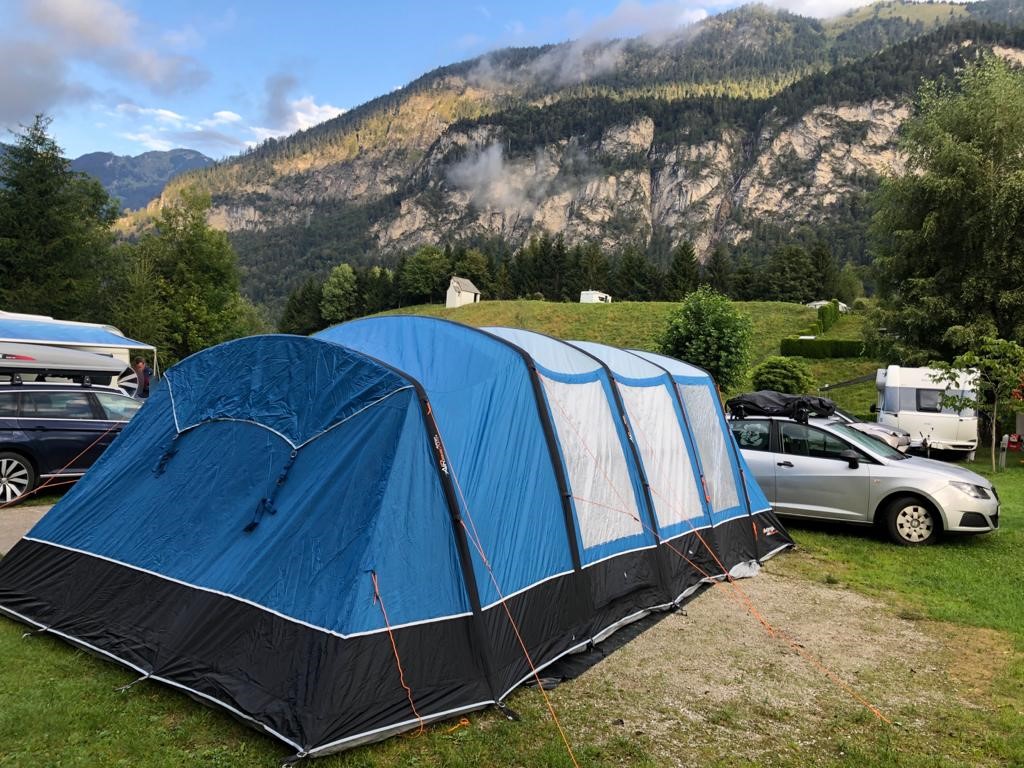
Suppose an editorial scenario targets completing essential setup by 17:00 and allocates 40 minutes to setup plus 20 minutes to an arrival contingency. Subtracting 60 minutes gives a planned arrival of 16:00. These are invented scheduling inputs, not destination daylight information or a recommendation for your trip. If an additional 30-minute task is discovered, the same scenario moves planned arrival to 15:30. Recalculate with real information instead of preserving the original arrival time by deleting necessary work. The example demonstrates arithmetic and the effect of a changed input; it does not predict travel duration or campsite access.
Use rehearsal notes to uncover missing work
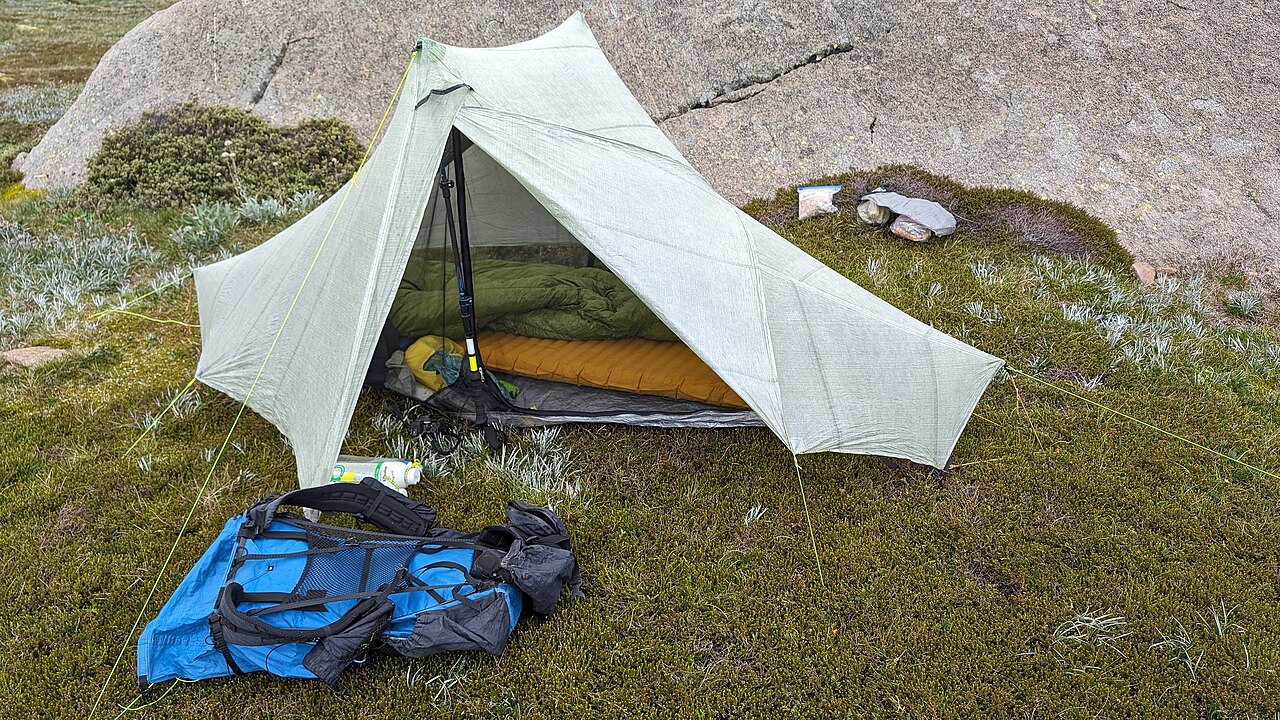
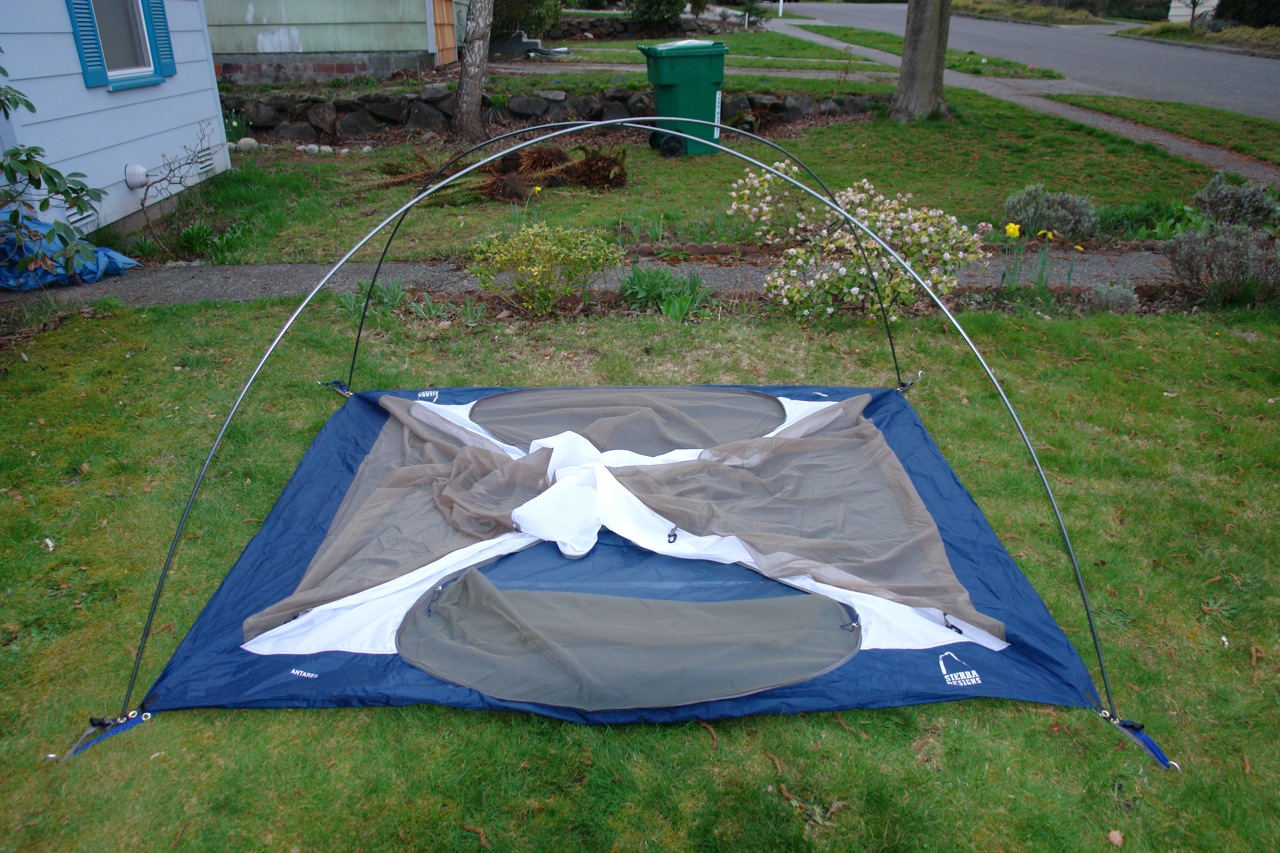
The intermediate tent-frame photograph makes the setup stage visible: equipment can be partly assembled while important work remains. Review what your own practice session required, including instructions, inventory and packing access. Do not turn one successful rehearsal into a guaranteed time under different conditions. Identify which tasks must be completed before departure, particularly repairs or missing components that should not be left for arrival. If the available travel and access arrangements cannot support a reasonable plan, reconsider the departure or destination. Buying faster-looking equipment is not a substitute for resolving an unrealistic schedule.
Write down the decision if the plan slips
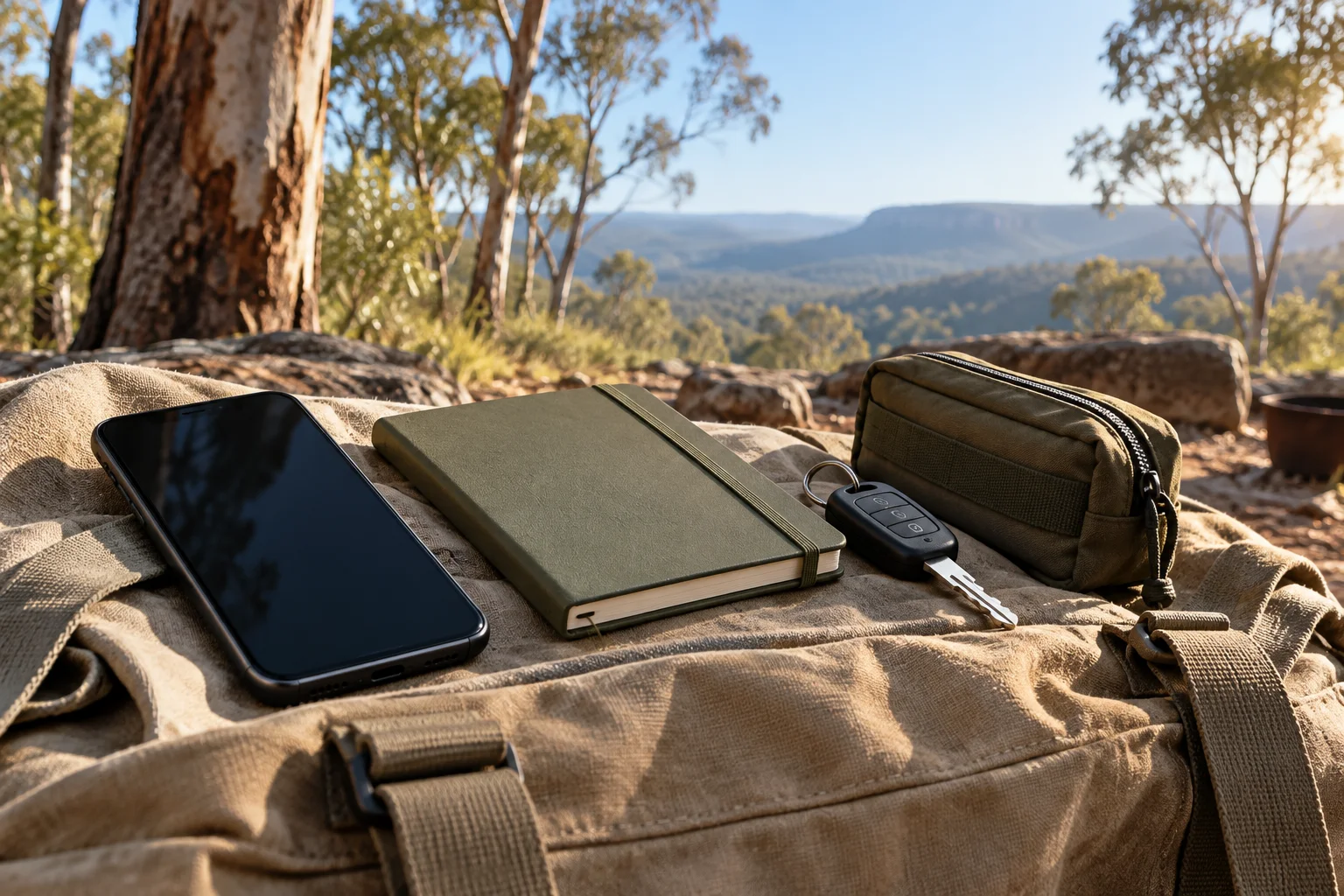
The campsite kit photograph shows multiple separate items that may need attention after arrival, reinforcing the need to plan beyond the tent alone. Agree how the group will respond if delays, restrictions or conditions change the itinerary. Check the operator's current access and booking requirements rather than inventing an alternative arrival procedure. Save the relevant contact and destination information for use during travel. The final schedule should identify assumptions, necessary tasks and a point for revisiting the plan. It should not imply that arriving before an arbitrary clock time guarantees enough light, suitable conditions or a successful campsite setup.