The final pre-departure checks your gear list cannot replace
Revisit current alerts, access and permissions alongside the final equipment inventory.
Updated:
Treat current conditions as a separate checklist
A complete gear inventory cannot tell you whether a campground is open, a road is suitable or the planned activity is permitted today. NSW National Parks provides camping-safety guidance and current destination information; the general guidance linked here was reviewed on 2026-10-27. This article organises a final information check, not a live alert service. Obtain the current notices for the actual destination and follow official directions. Conditions can change after an article is written or a bag is packed. Keep the destination decision visible rather than assuming that finishing the shopping list means the trip is ready to proceed.
Confirm the exact booking and access arrangement
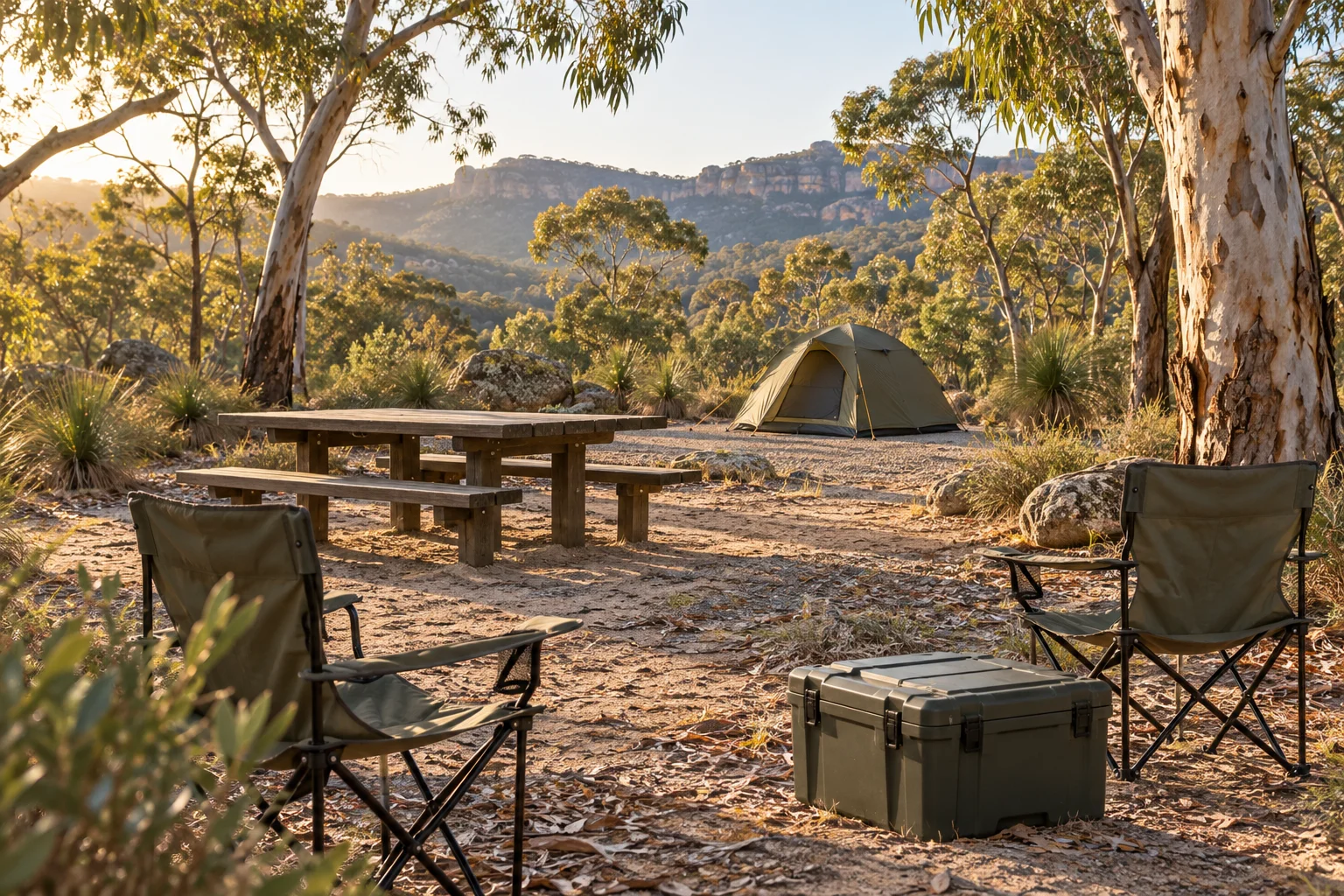
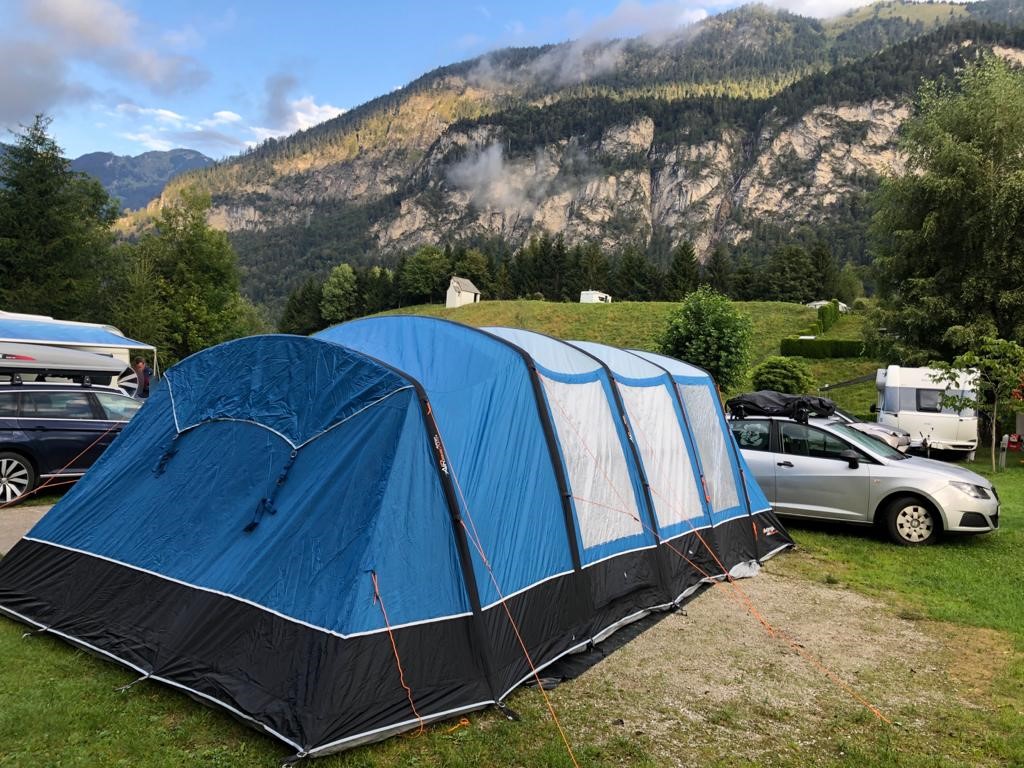
Match the destination, dates, participants and vehicle arrangement to the booking and official access information. The family-tent photograph shows one campsite beside vehicles, but it does not establish access for your site or vehicle. Review the current route and operator instructions through appropriate official sources. If a material requirement cannot be met, resolve it before leaving. Save the relevant information so it remains accessible when needed, while recognising that a saved copy may become outdated. Do not replace a specific access requirement with a general assumption based on a previous visit or another campground's layout.
Assign an owner to each unresolved question
Consider an illustrative final list with 5 checks: booking, access, current alerts, activity permission and equipment issues. If 4 have documented answers and 1 is unresolved, the list is not complete simply because most boxes are marked. Identify who will obtain the missing answer and how it affects the departure decision. A planning allowance might reserve 15 minutes for reviewing notices and 10 minutes for discussing changes, totalling 25 minutes. These are administrative inputs, not a guarantee that a complex issue can be resolved quickly. Do not treat elapsed time as an answer to the remaining question.
Carry forward equipment faults instead of hiding them
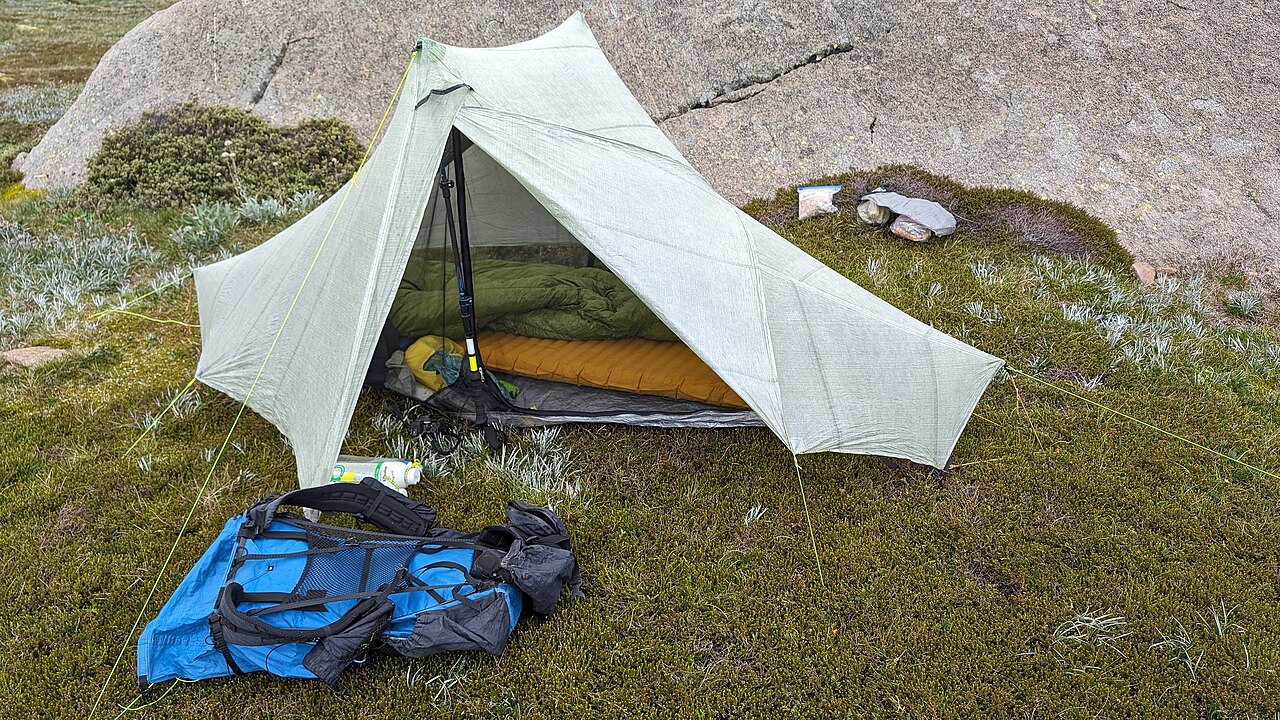
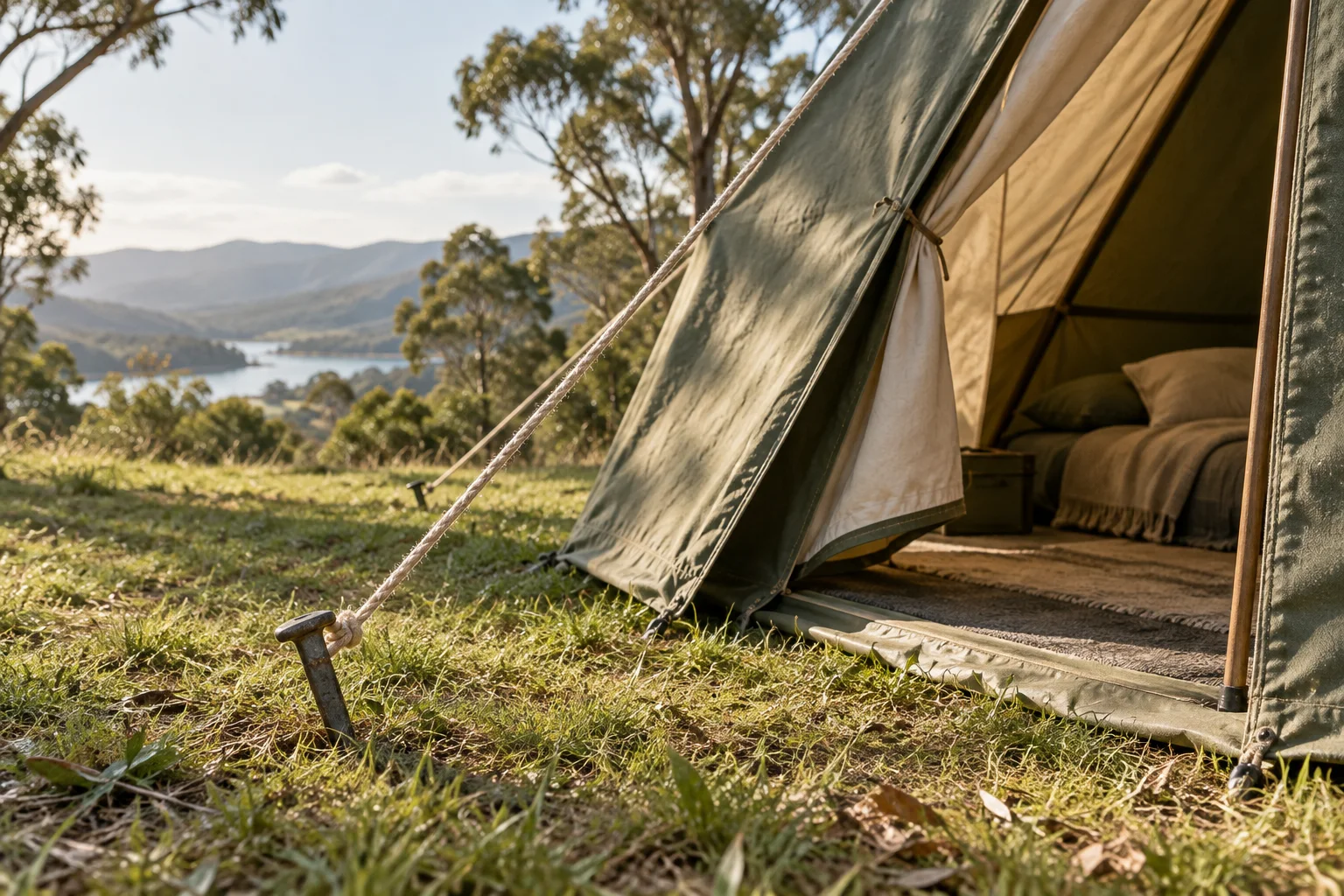
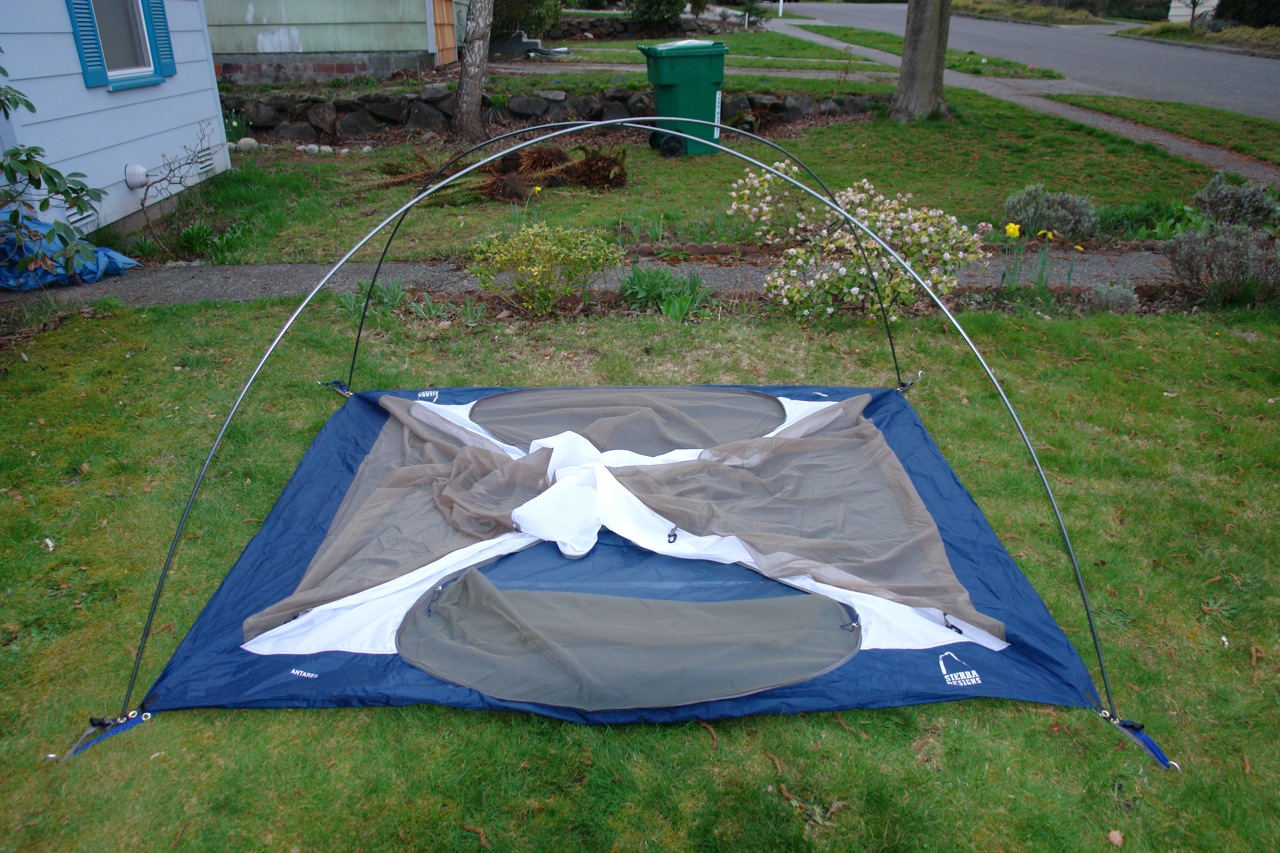
The tent-frame photograph illustrates a stage where a shelter is not yet complete. Use the rehearsal record to distinguish completed checks from unresolved parts or operation problems. A packed bag should not erase a note about missing or unsuitable components. Review the equipment instructions and resolve issues through the appropriate supplier or manufacturer. Check current activity restrictions separately; for example, consult the official fire-ban information rather than assuming a purchased stove may be used. This guide does not issue a go-ahead for any appliance. A changed restriction may require changes to meals, equipment or the trip itself.
End with a decision that reflects the evidence
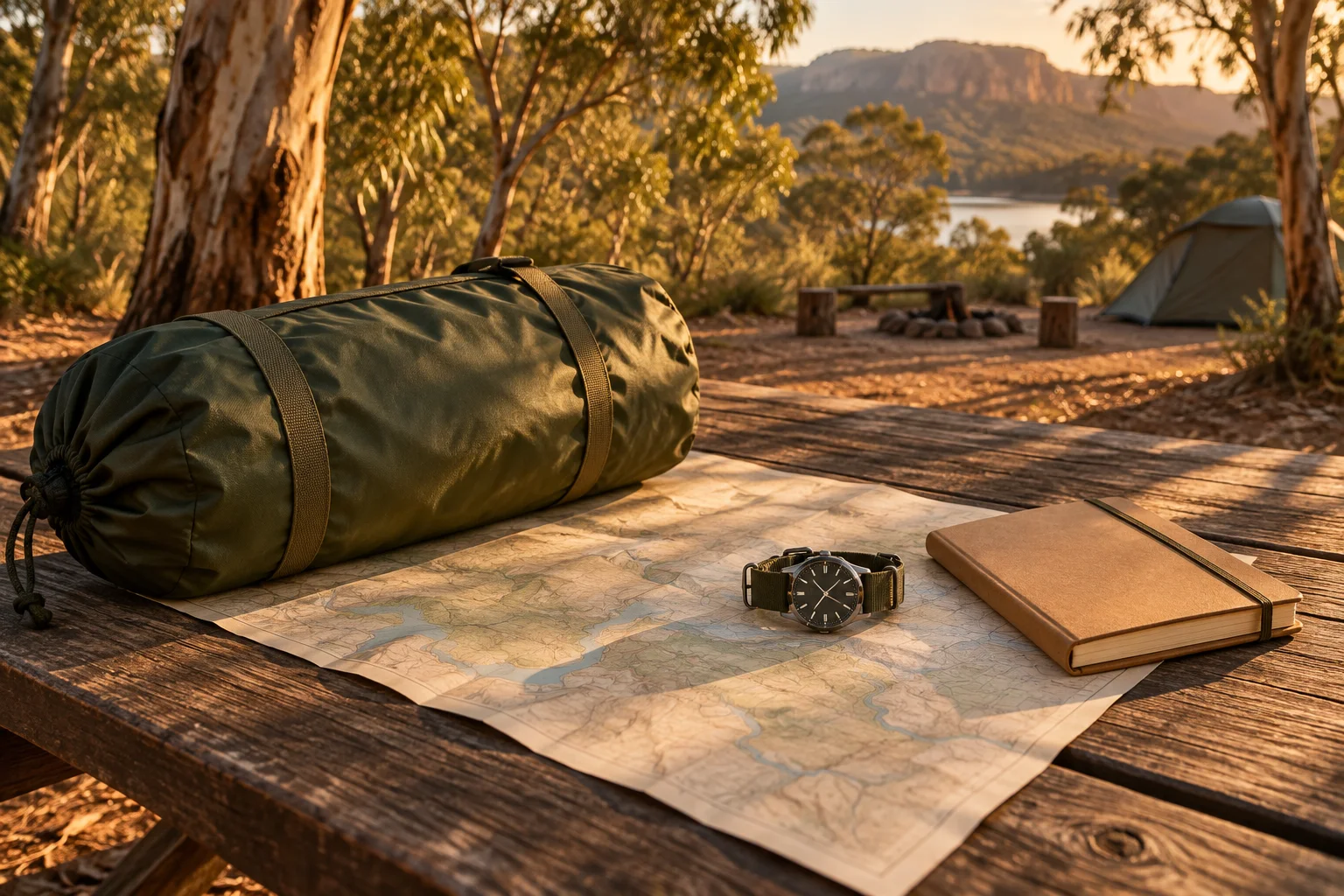
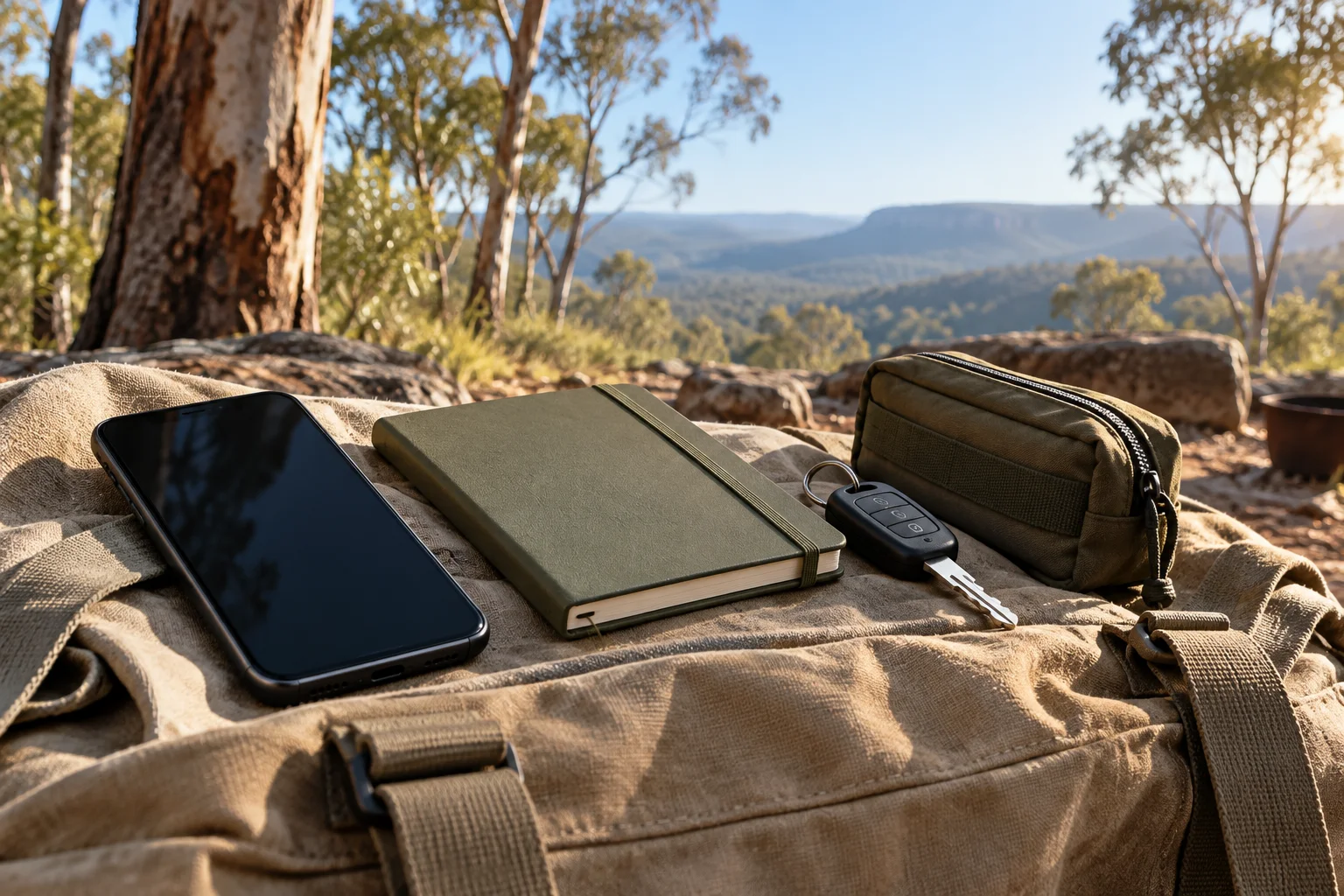
The campsite kit photograph shows the equipment side of preparation, but equipment is only part of the departure decision. Record what was checked, when it was checked and which authoritative source supplied the information. Make unresolved issues explicit to the people affected. If current conditions, access or equipment do not support the intended visit, revise or postpone the plan instead of treating the packed vehicle as a commitment to continue. Recheck relevant notices as the trip progresses. The useful result is an informed decision with current evidence and acknowledged uncertainty, not a guarantee of safety or a promise that no further changes will be needed.