Choose a tent by floor fit before its person rating
Measure your sleeping mats, understand the usable floor and rehearse the pitch before choosing a tent for an Australian camping trip.
Updated:
Start with the kit that must fit inside
For a first Australian camping trip, shortlist a tent by the space your actual sleeping kit needs, then assess its suitability for the destination and conditions. A person-count label alone cannot tell you whether two wide mats, your bags and your preferred sleeping arrangement will fit. This is a buying method for an ordinary campground trip, not a recommendation for alpine, remote or severe-weather camping.
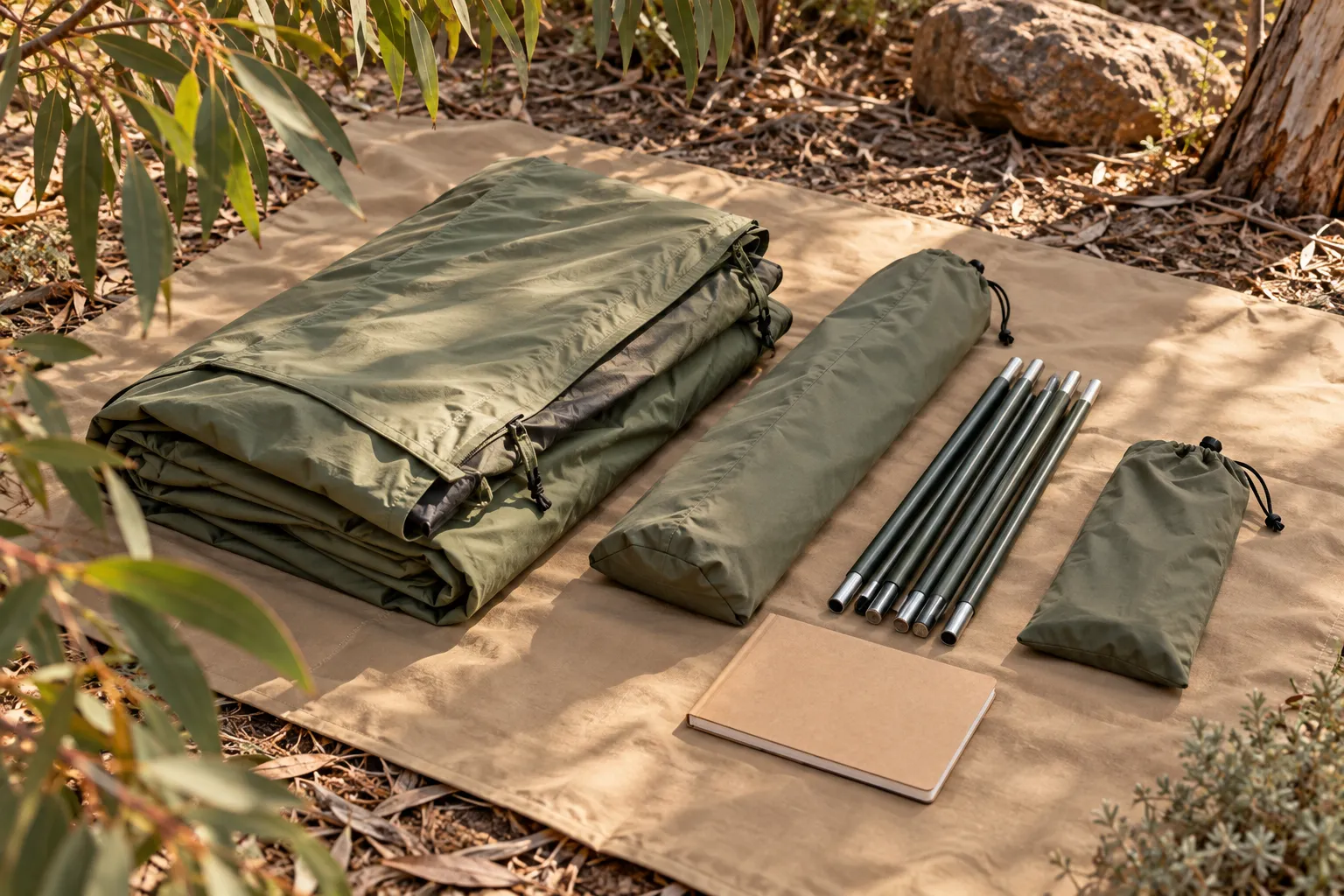
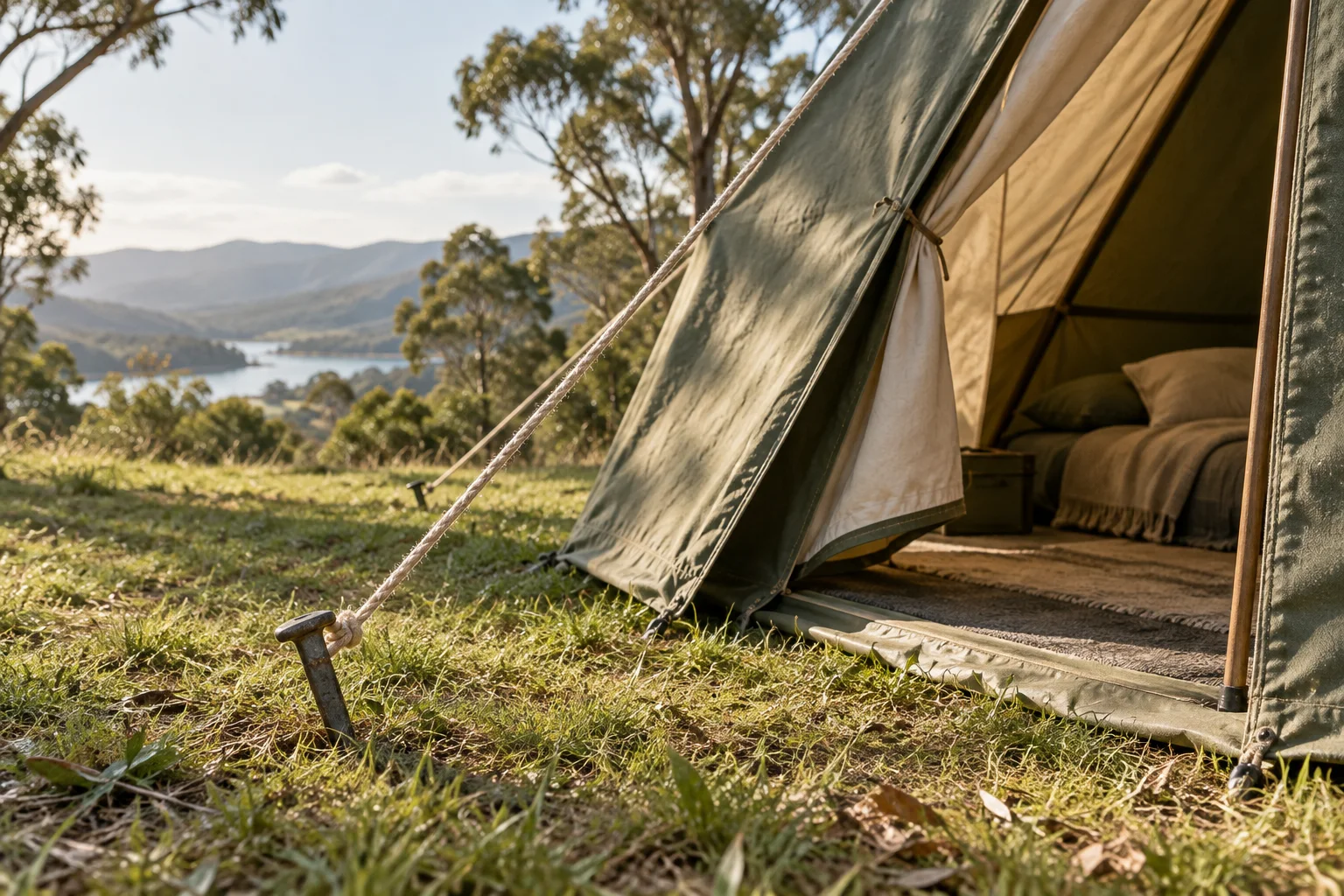
Parks Victoria recommends becoming familiar with a tent before the trip and includes both a sleeping bag and a sleeping mat on its packing list. Turn that preparation into a practical purchasing test: lay out the mats you already own, measure them and draw the inner floor of the candidate tent. Keep the outer fly dimensions separate. The photograph below shows a raised porch beyond the sleeping compartment; that visible covered space should not automatically be counted as sleeping floor.
Parks Victoria: practise with your equipment (reviewed 2026-10-27) ?
A worked two-mat layout, with assumptions visible
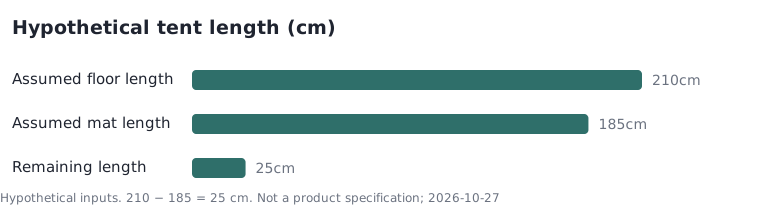
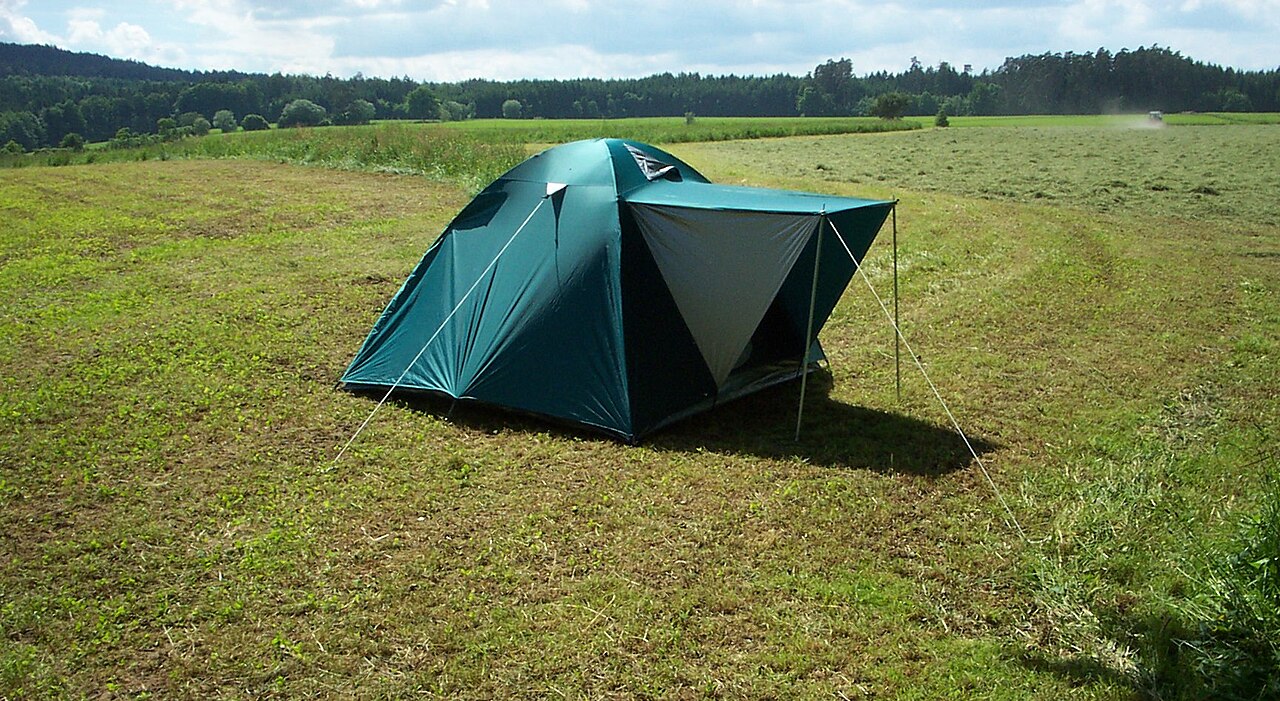
Consider a hypothetical rectangular inner floor measuring 140 cm wide and 210 cm long. Assume each of two mats measures 55 cm wide and 185 cm long. These are invented dimensions for arithmetic only; they are not the specification of any photographed tent or a real product recommendation. Put the mats side by side along the long axis.
The combined mat width is 2 × 55 = 110 cm. Subtracting that from the assumed 140 cm floor leaves 30 cm across the whole width, not 30 cm beside each sleeper. The remaining length is 210 − 185 = 25 cm. The resulting answer is a geometric fit with 30 cm total width remaining and 25 cm length remaining. It does not establish comfortable occupancy, dry storage or weather protection.
Why a neat rectangle can give the wrong answer
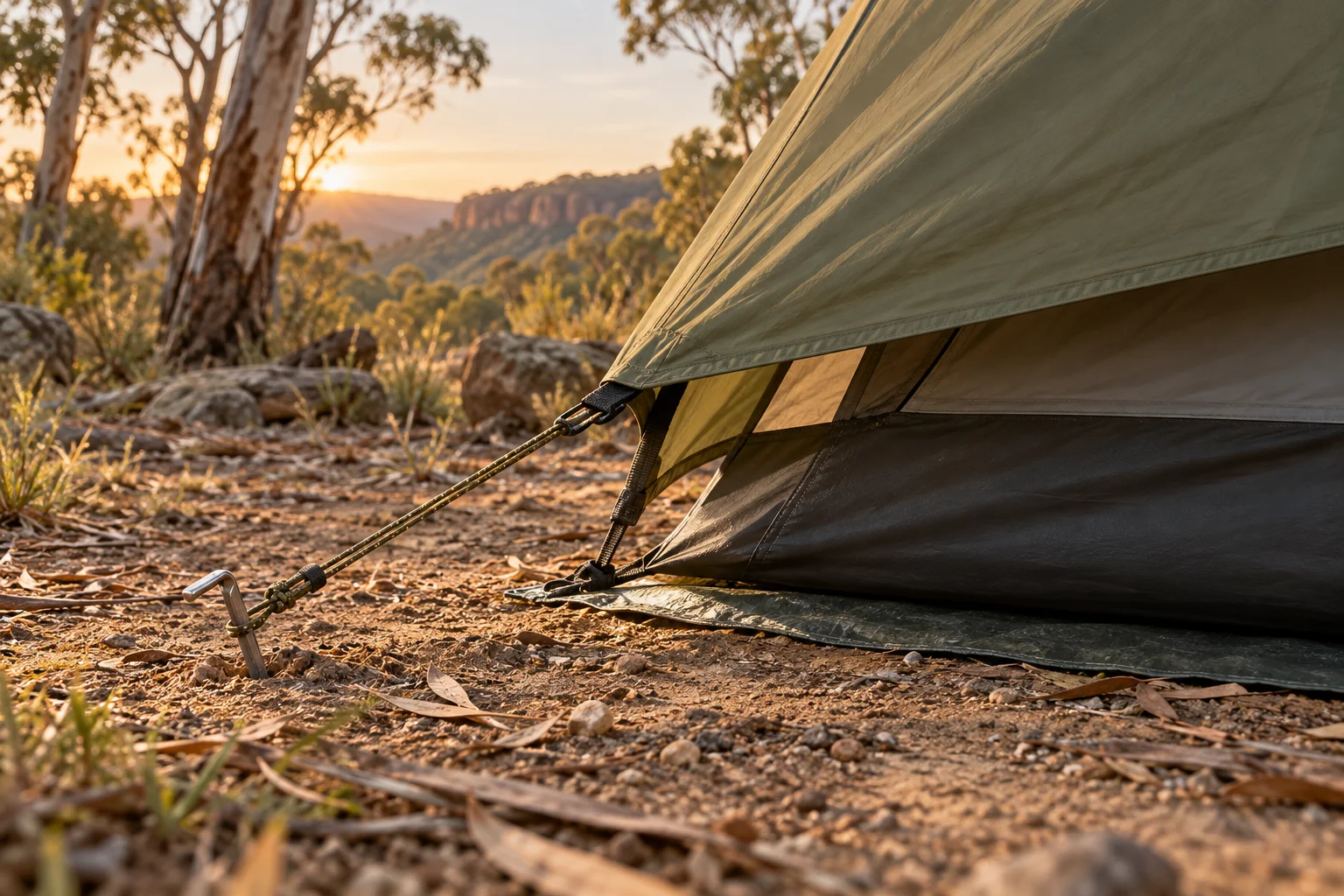
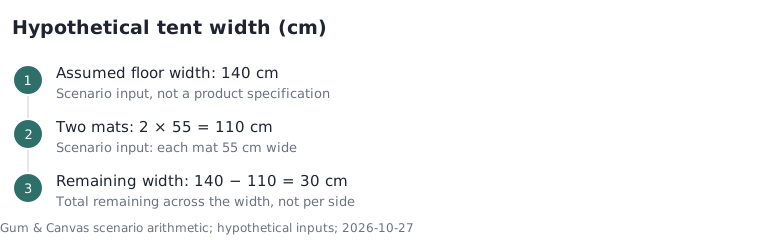
Many inner floors taper towards one end. Sloping walls can reduce space around a thick mat, a raised camp bed or the foot of a sleeping bag. A door that opens across the luggage area may be inconvenient even when the headline floor area looks generous. In the low-profile tent photograph, the changing roof height is a reminder to consider usable volume as well as the plan view; it is not a measurement of that tent.
The exception changes the decision: if the narrow end is only 100 cm in our hypothetical case, two 55 cm mats cannot sit side by side there, because they require 110 cm. A nominal maximum width of 140 cm elsewhere would not solve that mismatch. Request the narrow-end dimensions or test the actual equipment in a display tent. Do not rotate the mats in a sketch without also checking the resulting length.
Check the complete pitch, not just the bedroom
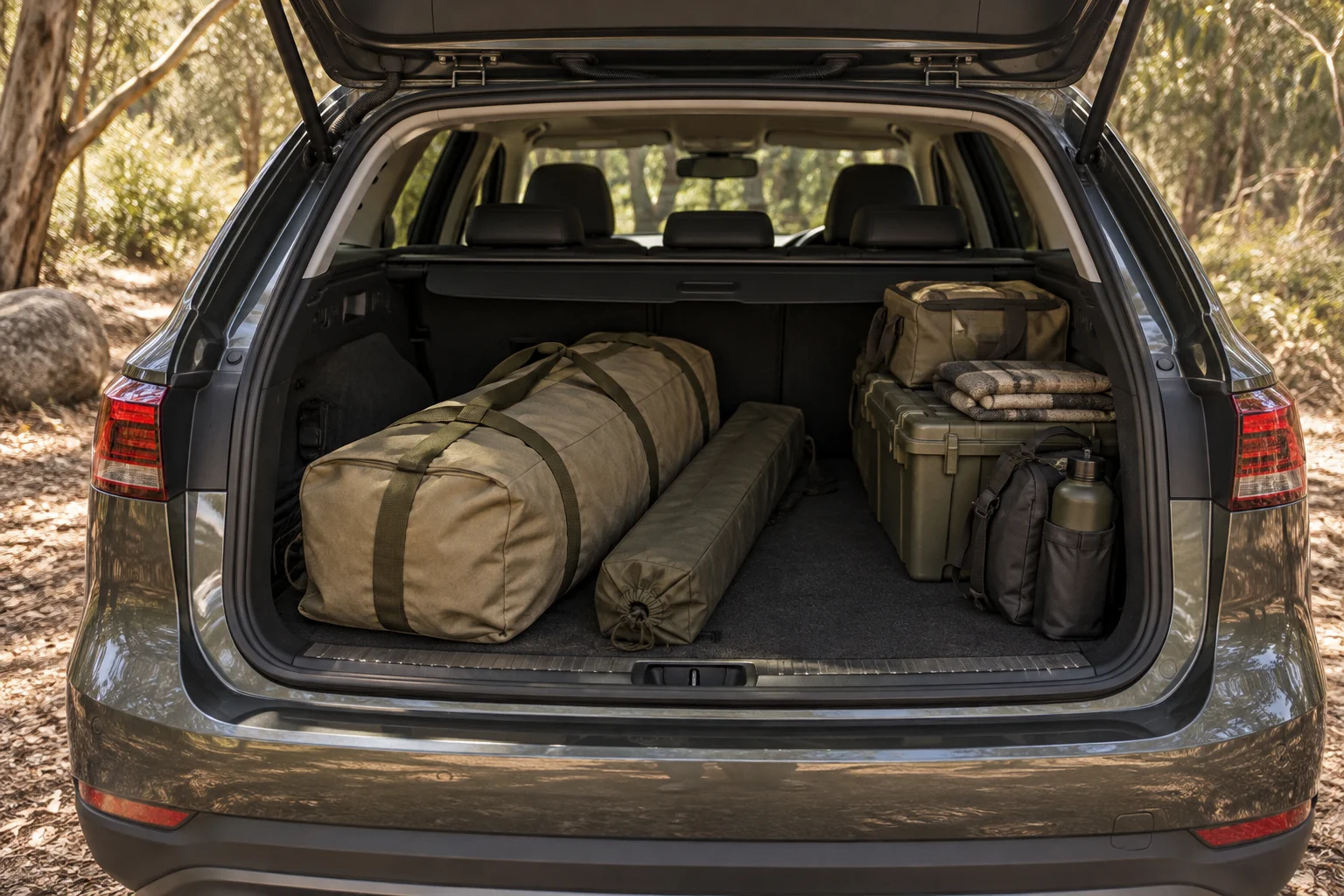
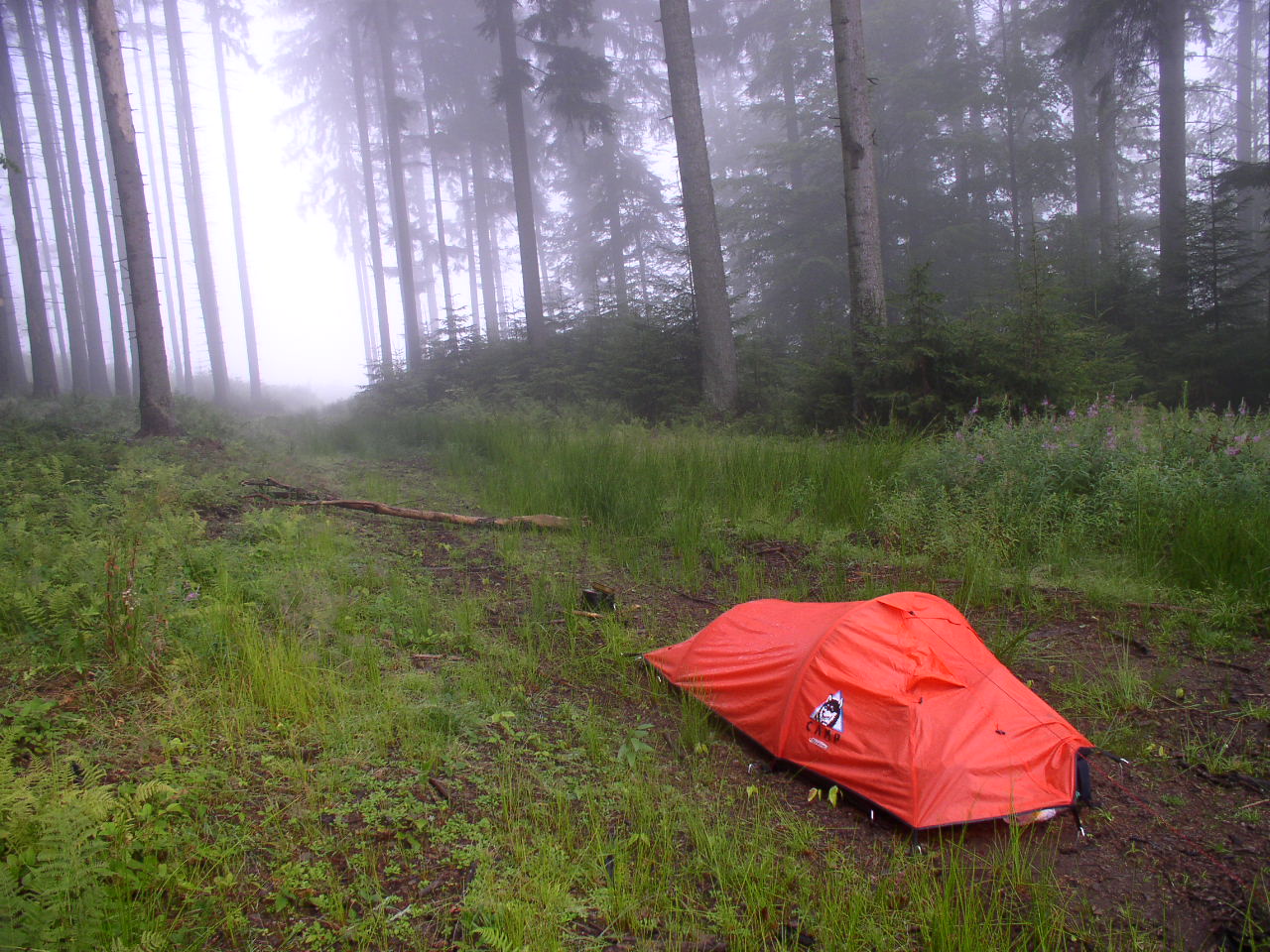
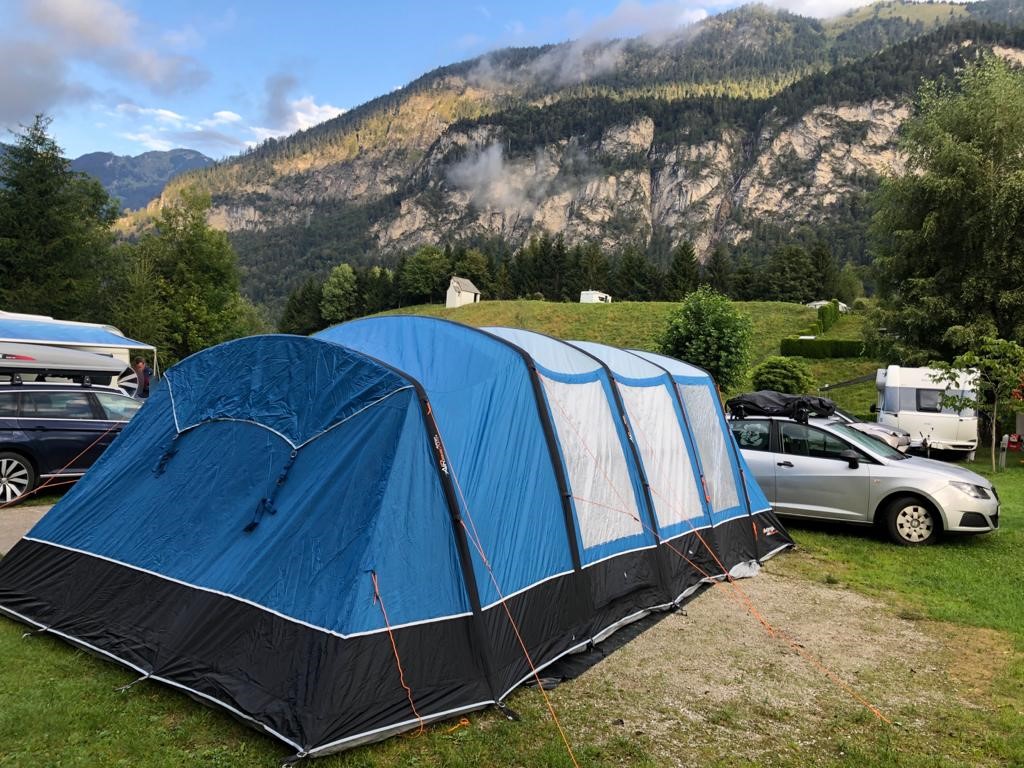
A larger family tent can provide a separate living area, but it also asks more of the campsite and the transport plan. The third photograph illustrates that difference in overall footprint. It is an overseas equipment example, not a recommended Australian campsite or an endorsement of the pictured model. The three photographs in this guide are structural illustrations, not proof of a particular weather rating.
NSW National Parks advises matching the access road and campsite to your vehicle and equipment, checking equipment condition and reviewing current alerts. Measure the tent bag against the boot opening as well as the available luggage space. Record the full pitched footprint, including the manufacturer's required anchoring arrangement, separately from the inner-floor measurements. A floor-fit calculation cannot confirm that a site is suitable or open.
NSW National Parks: camping preparation and safety (reviewed 2026-10-27) ?
Finish with a rehearsal and a short purchasing record
Before committing to an unfamiliar shelter, make a one-page record with four entries: your sleeping-kit dimensions, the narrowest usable floor dimensions, the complete pitched footprint and the packed dimensions. Add the source of each figure. If a retailer gives only an outer length, mark the inner length as unknown rather than transferring the number. Borrowing or hiring for an initial short trip can also reveal which spaces you actually use; compare the real terms rather than assuming that either option costs less.
Once you have the equipment, rehearse the pitch according to its instructions while there is time to find missing pieces. Place the mats, close the doors and try the normal movements of getting in and out. Select the campsite through its official booking information, and review current local conditions before travelling. For the example above, the shortlist decision is explicit: the rectangular 140 × 210 cm floor passes the simple two-mat sketch; a 100 cm narrow end fails it. Neither result is a safety certification.
Parks Victoria: equipment checklist and campground preparation (reviewed 2026-10-27) ?