A first-pitch rehearsal that catches missing parts
Use a home rehearsal to check your tent inventory, understand its instructions and record what must be fixed before travelling.
Updated:
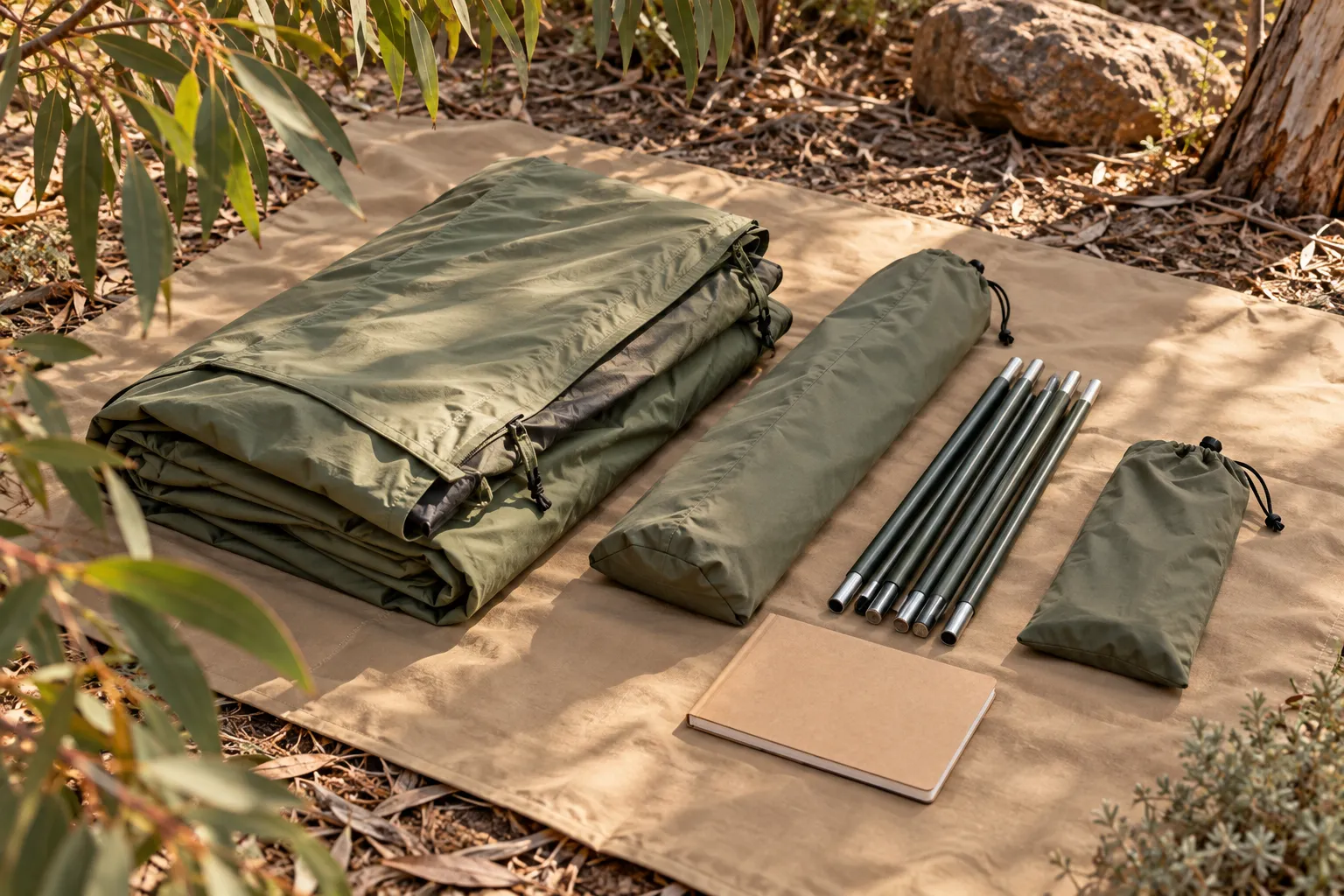
Rehearse the whole job while you can still fix it
A useful first-pitch rehearsal ends with a complete tent, a checked parts list and a clear record of anything missing. Simply pulling the tent out of its bag is not enough. For an Australian campground trip, do the rehearsal before departure and follow the instructions for your particular model. Parks Victoria specifically recommends a home practice run with major camping equipment. The process here is an editorial way to organise that practice, not a universal tent-assembly sequence.
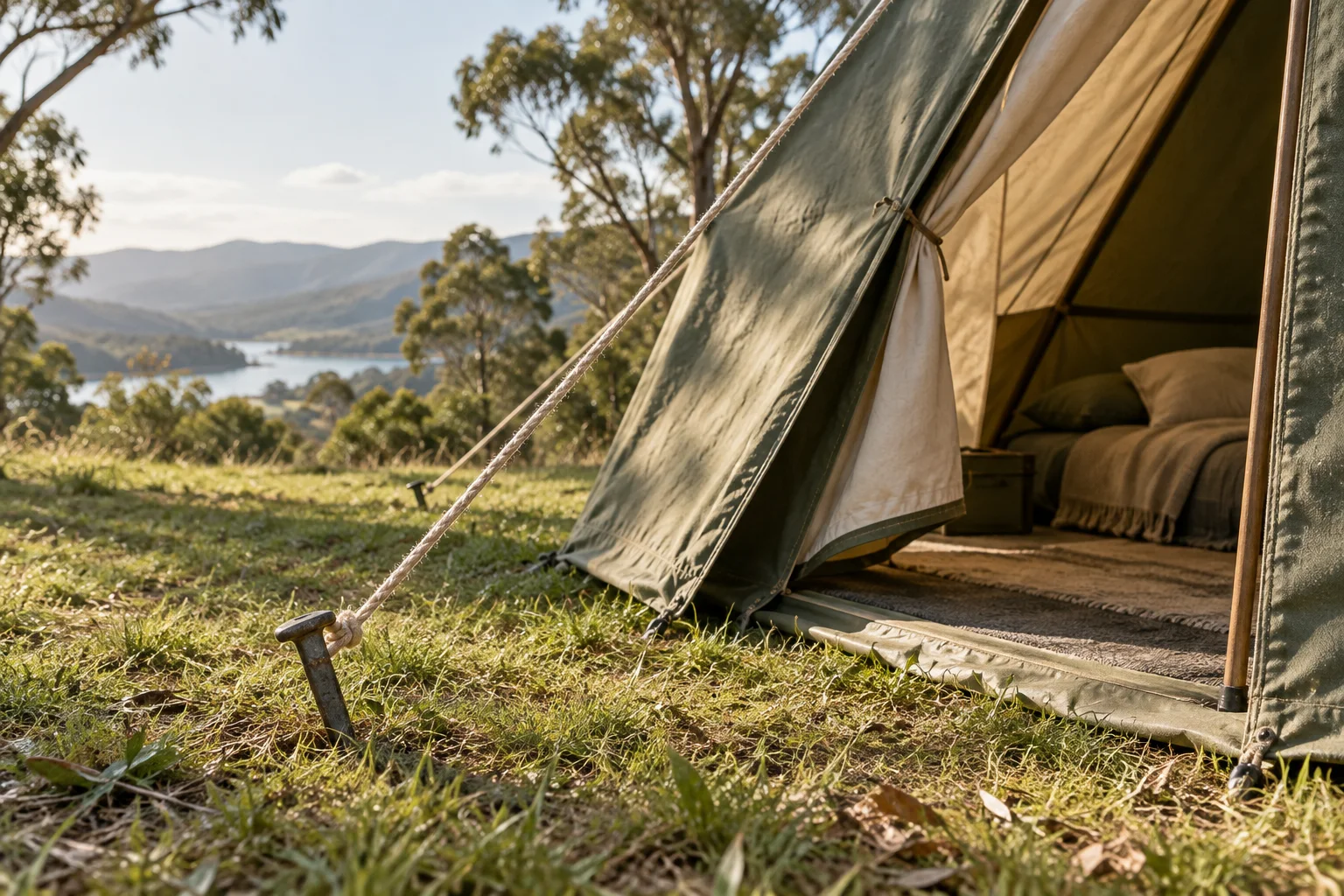
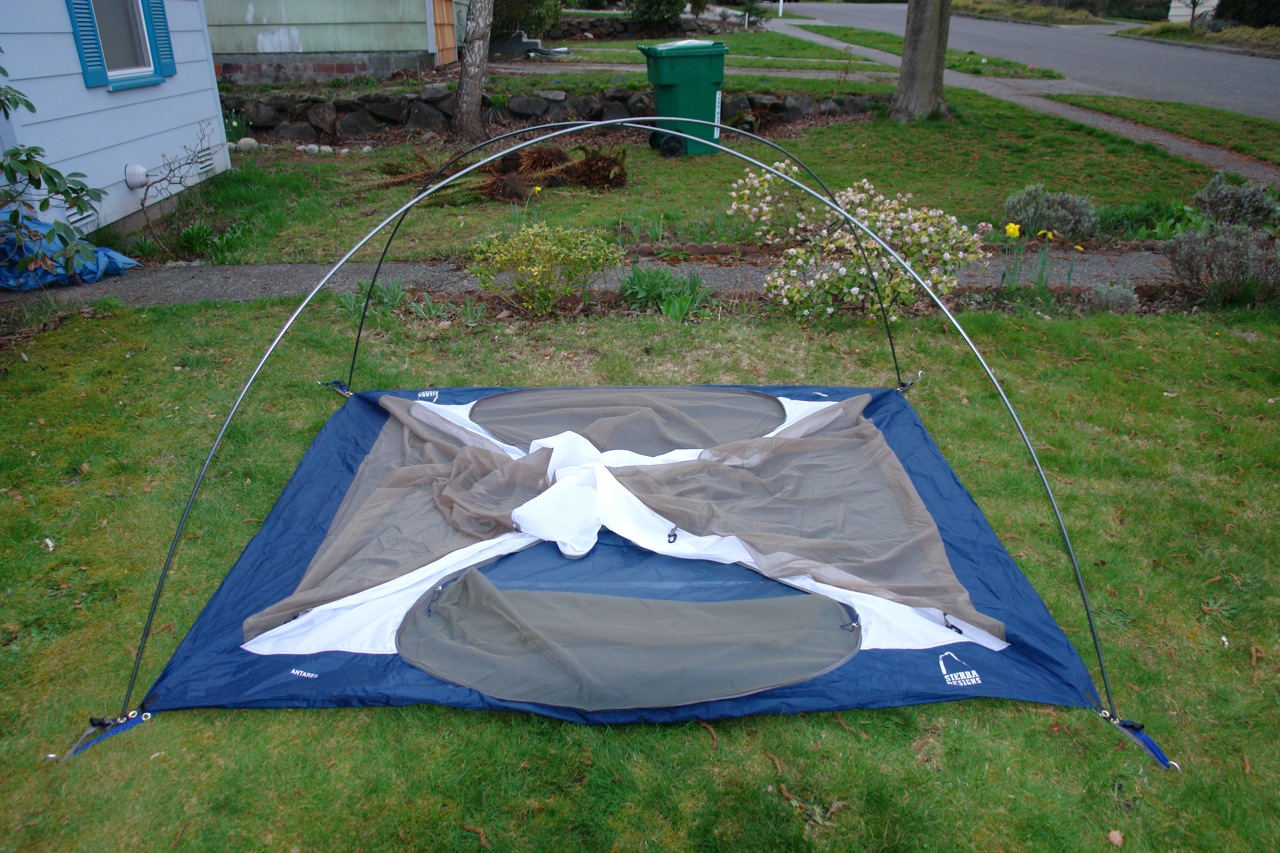
Use a suitable location where you have permission to practise and where the manufacturer's setup requirements can be met. Read the instructions before applying force to unfamiliar poles or fittings. The frame photograph shows one model at an intermediate assembly stage: it is useful for seeing the separate fabric and pole system, but it must not be treated as a diagram for a different tent.
Parks Victoria: become familiar with your gear (reviewed 2026-10-27) ?
Separate a parts inventory from a shopping list
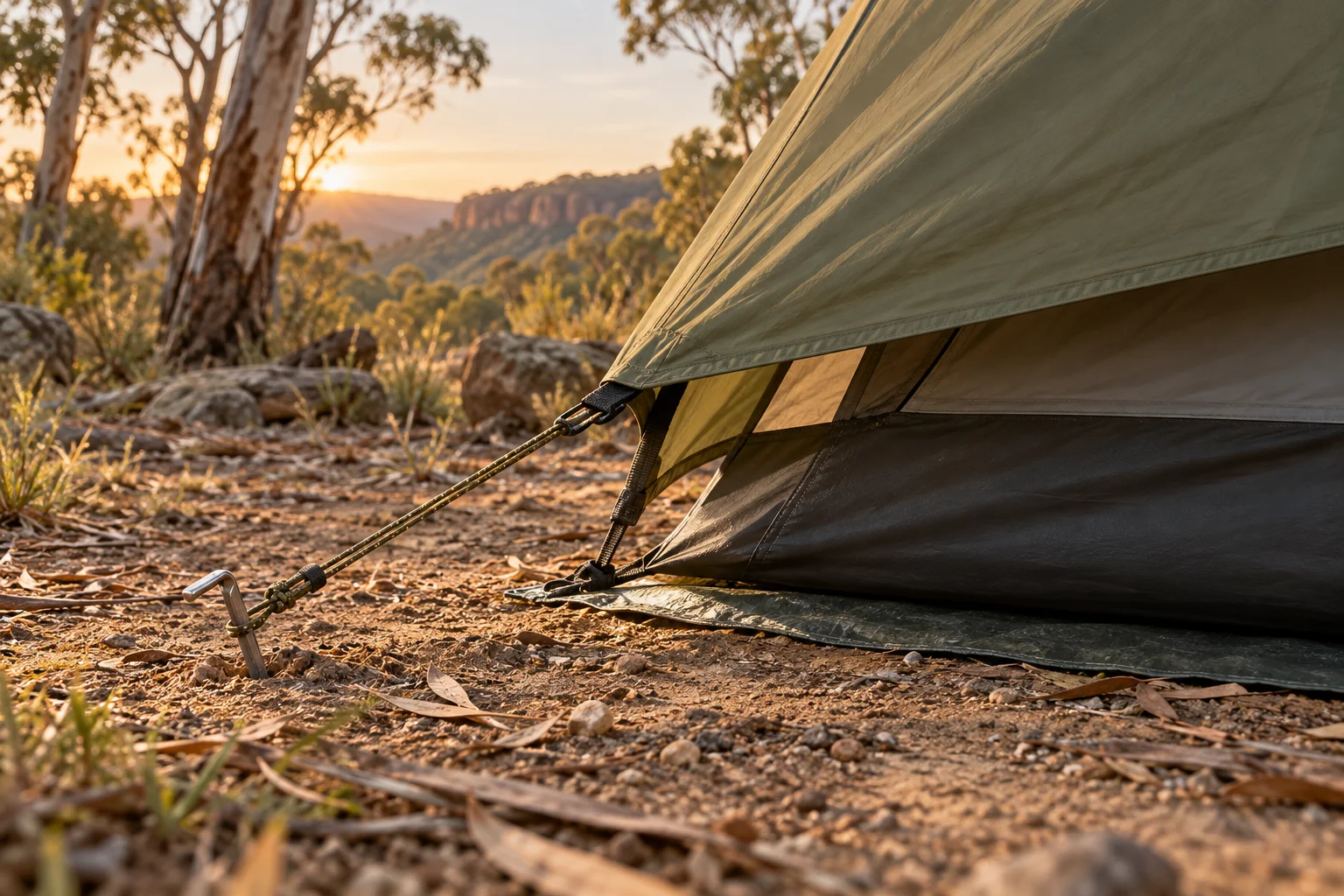
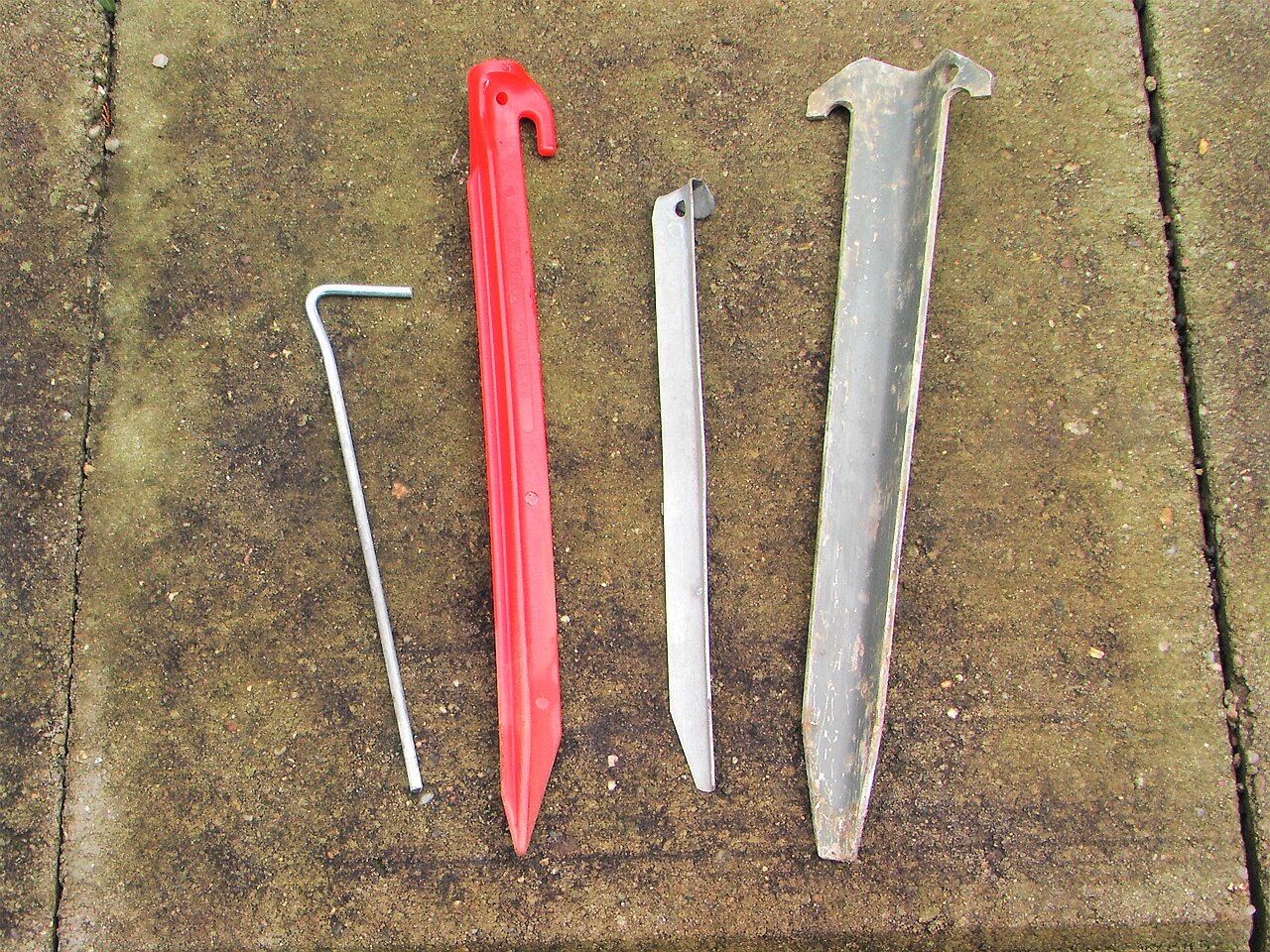
Lay out the supplied components and match them to the model's inventory. Record the inner, fly, pole sections, pegs, guylines and bags only where those components apply to your tent. The peg photograph shows several different shapes. It demonstrates why a bag containing many pegs is not automatically the right anchoring kit for every model or surface; this guide does not rank those shapes by holding strength.
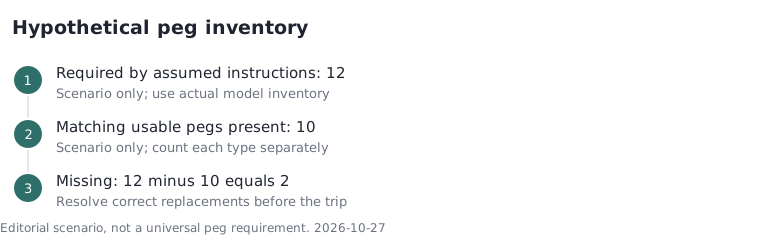
For a hypothetical inventory, suppose the instructions specify 12 pegs and the bag contains 10 matching usable pegs. The arithmetic is 12 minus 10 equals 2 missing pegs. That is a parts shortfall, not permission to omit two anchoring points. Ask the maker or retailer for the correct replacement specification and record the issue as unresolved until suitable parts are obtained. If the instructions specify different types, count each type separately rather than combining them.
Budget a practice session without turning it into a performance claim
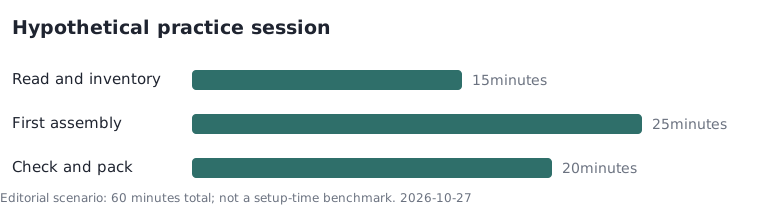
An illustrative practice plan might allocate 15 minutes to reading and inventory, 25 minutes to a careful first assembly and 20 minutes to checking and packing. The sum is 60 minutes. These are planning assumptions, not manufacturer setup times or a promise that the task will fit into an hour. They are useful because they leave room for the checking and packing work that is easy to forget.
If a problem takes another 20 minutes to diagnose, the revised plan becomes 80 minutes, and unresolved damage may require a different trip plan. Do not turn a practice schedule into a reason to rush. The time you actually record is specific to your equipment, experience and circumstances. Save the observation as a personal planning note rather than presenting it as a product benchmark.
Test the living arrangement after the tent is complete
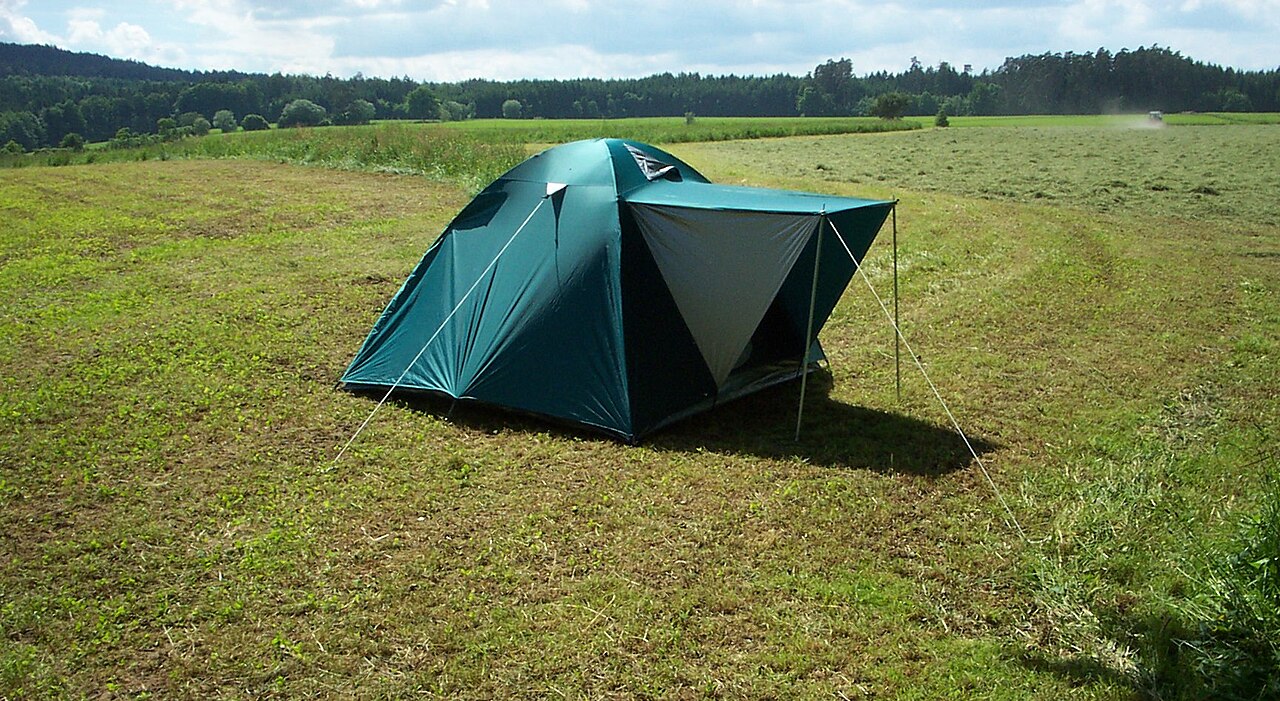
Once the model is properly assembled, put the actual sleeping kit inside and try the ordinary movements you expect to make. Open and close the entrances as instructed, identify where bags will go and examine how the separate covered areas work. The porch photograph illustrates a covered entrance beyond the main compartment; it is not evidence of a safe cooking area. Never infer that a porch or tent is suitable for using a fuel appliance.
NSW National Parks tells campers to keep their equipment in working order and never cook inside a tent or enclosed camping space. Its advice is relevant to the equipment check, but it does not replace current local restrictions or the manufacturer's instructions. A rehearsal also does not prove that the tent will be suitable for the weather, ground or access conditions at your destination.
NSW National Parks: equipment and cooking safety (reviewed 2026-10-27) ?
Pack an outcome, not just a bag
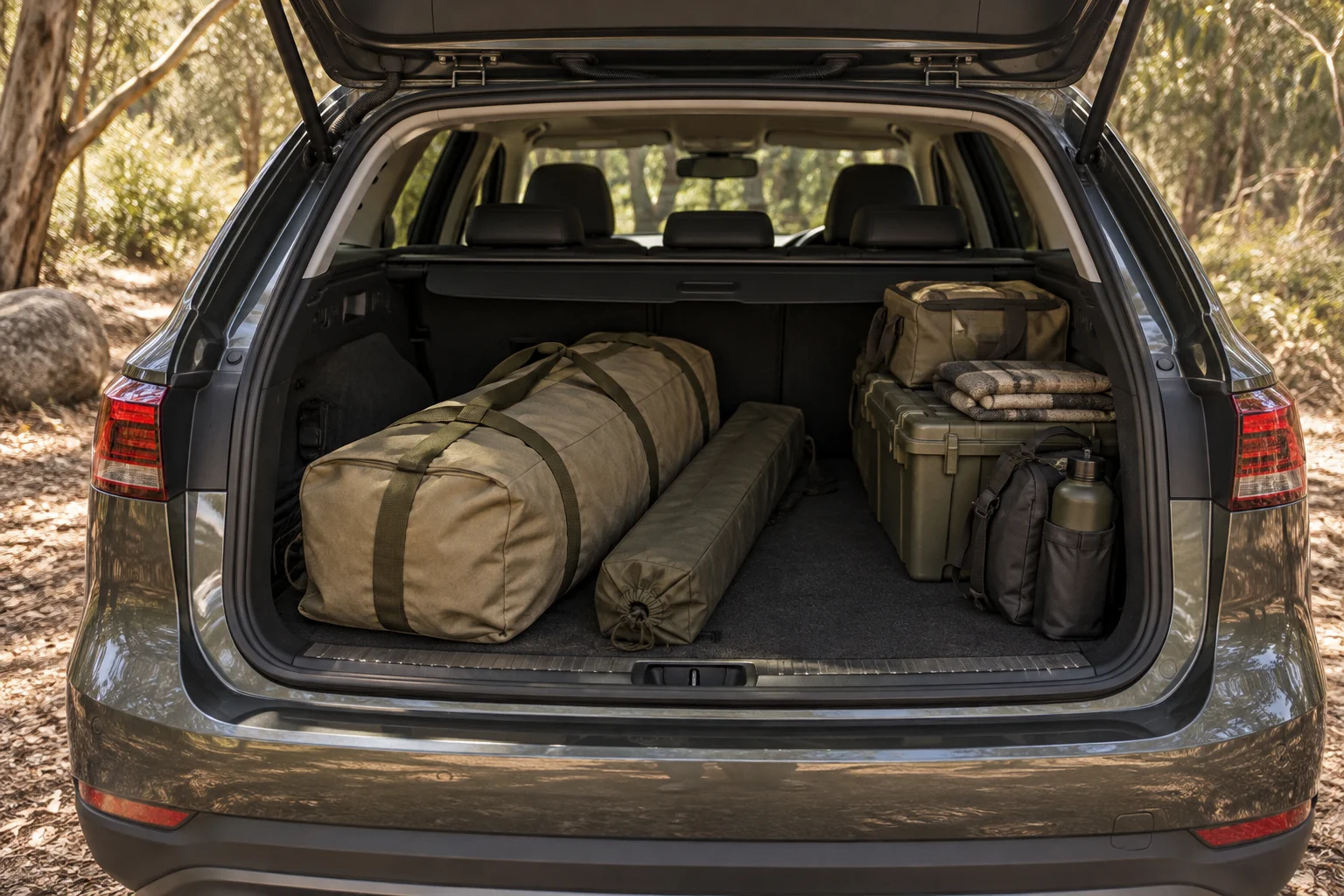
Finish by writing one of three outcomes: complete and understood, incomplete pending specified parts, or unsuitable for the planned trip. Note the model, what was checked and the date. Keep instructions accessible for the trip. Follow the manufacturer's drying, cleaning and storage directions before putting equipment away; a wet practice session can change what needs to happen next.
For the example inventory, buying the correct two missing pegs closes the counted shortfall only after their suitability and the rest of the system are checked. For the example schedule, the recorded 80-minute session becomes useful evidence for your next preparation plan. The final action is to resolve the recorded issues before packing for departure, then review the destination's current information. Having completed a home rehearsal is a preparation step, not a guarantee of a trouble-free campsite arrival.