Will the tent bag fit your car boot?
Check the boot opening, pole bag and complete load before choosing a tent from its sleeping capacity.
Updated:
Treat transport fit as its own decision
The size of a pitched tent does not tell you whether its packed bag will pass through your vehicle's boot opening. Before buying, obtain the packed dimensions of the exact model and identify any separate pole or peg bags. Parks Victoria's packing checklist, reviewed on 2026-10-27, includes equipment beyond the tent, so the transport question concerns the complete load. This guide offers a measurement process, not advice on vehicle load ratings or restraint systems. Consult the vehicle instructions and relevant requirements for those matters. A roomy sleeping compartment and an easy-to-pack vehicle are separate purchasing questions.
Measure the opening before the storage cavity
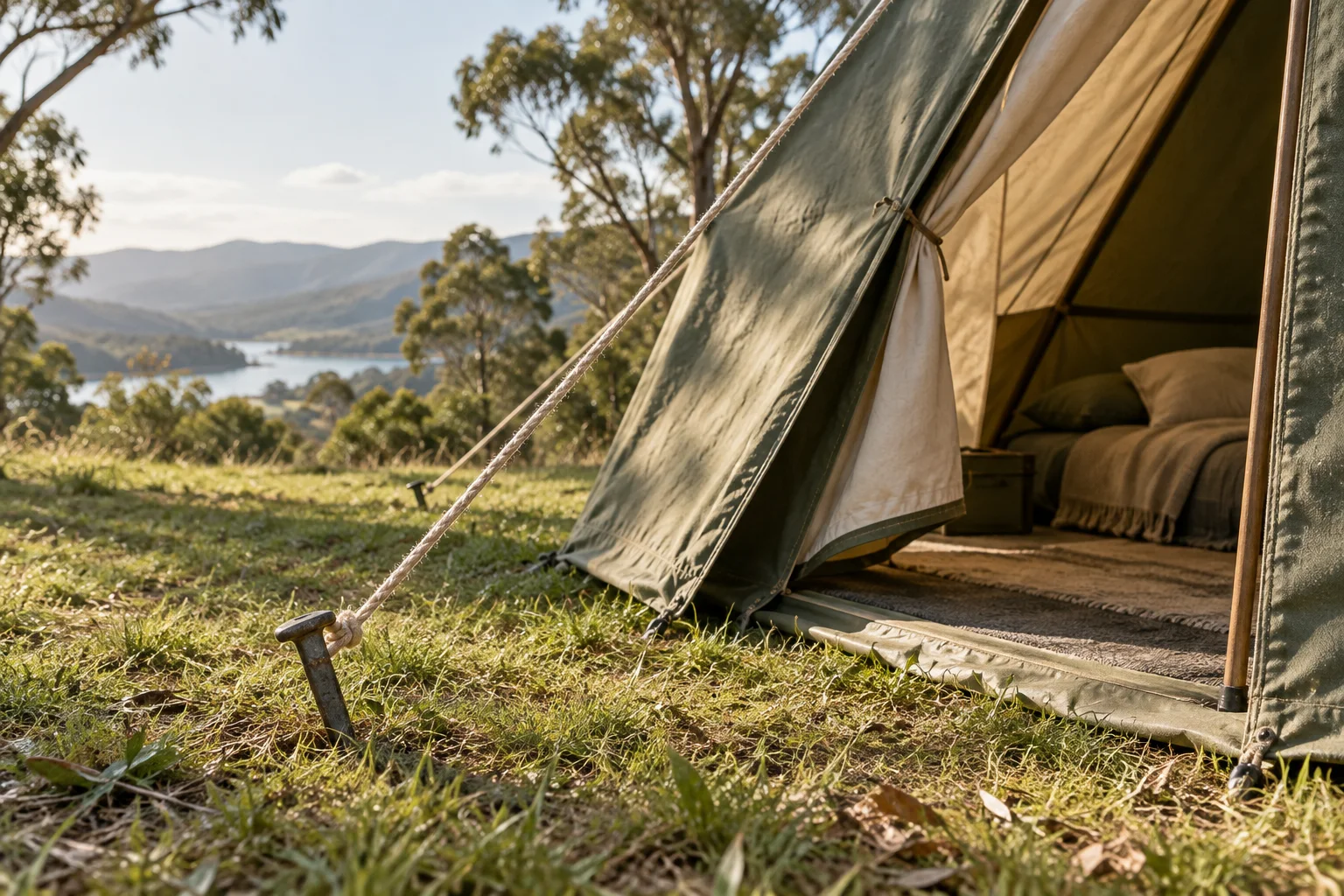
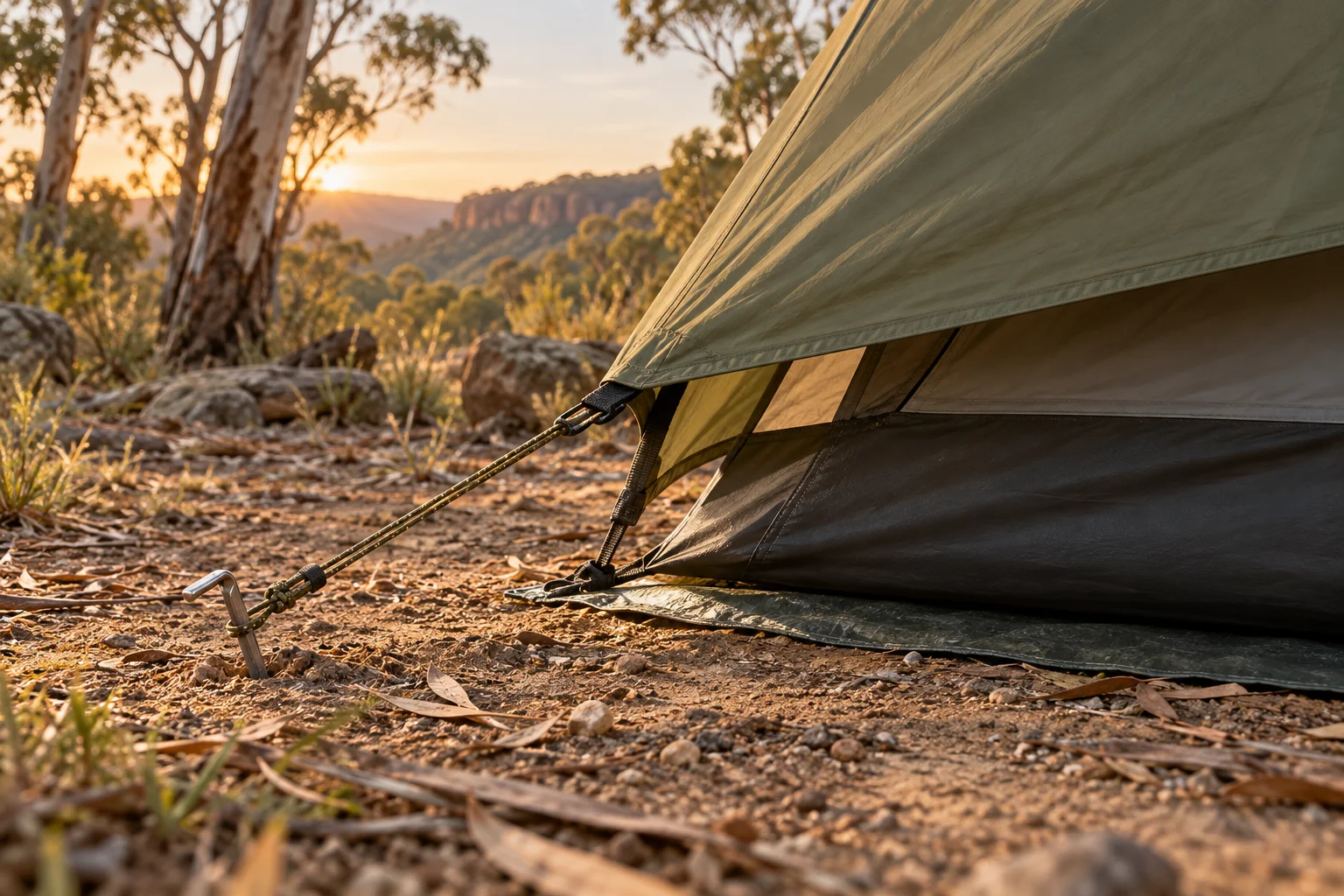
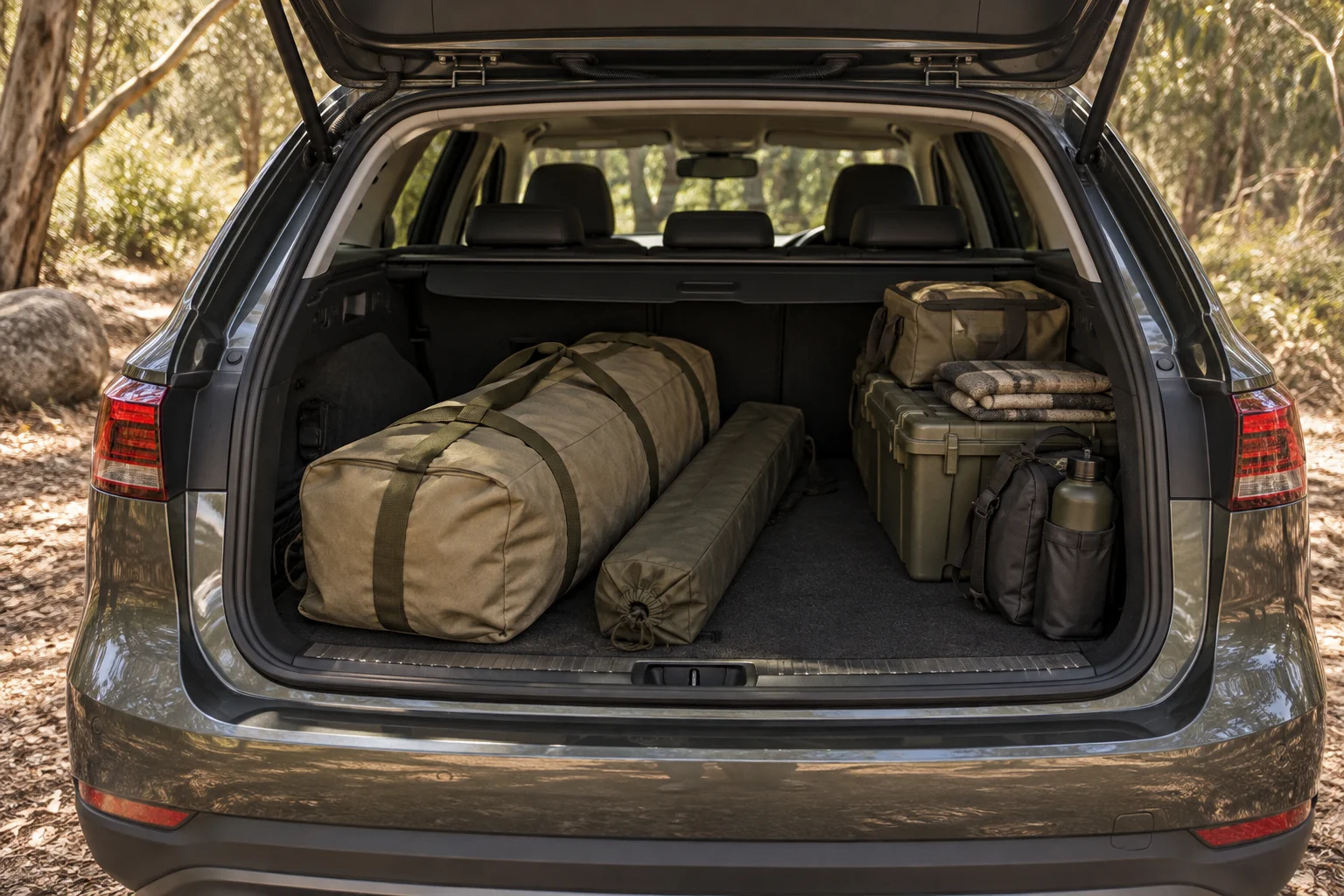
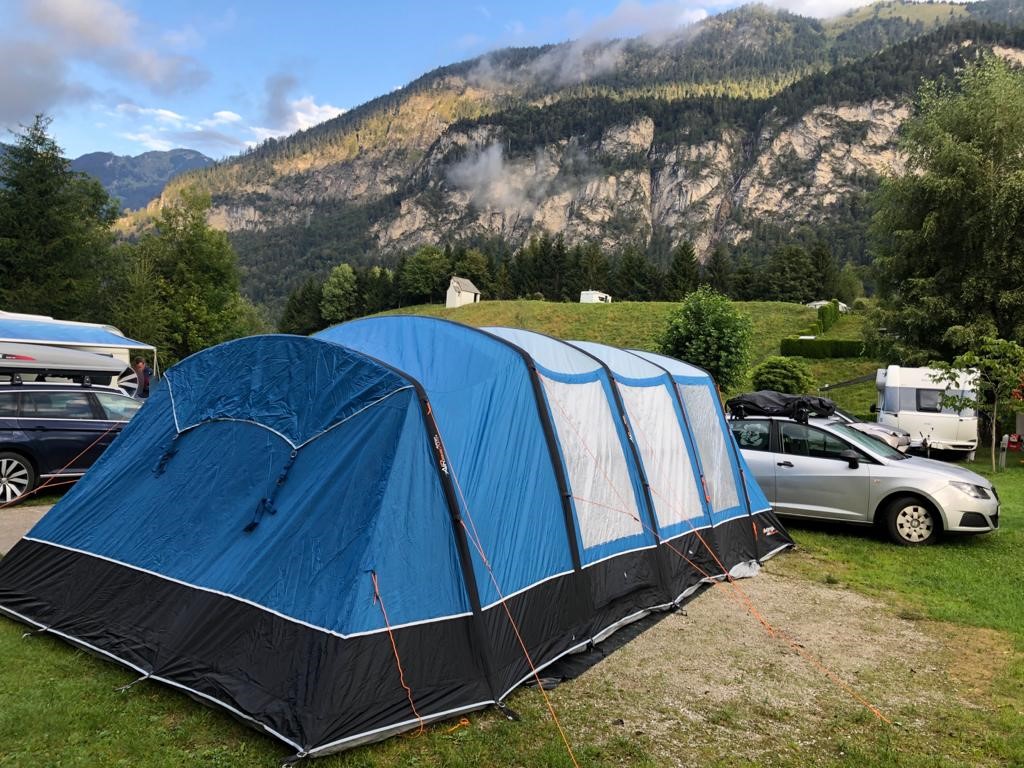
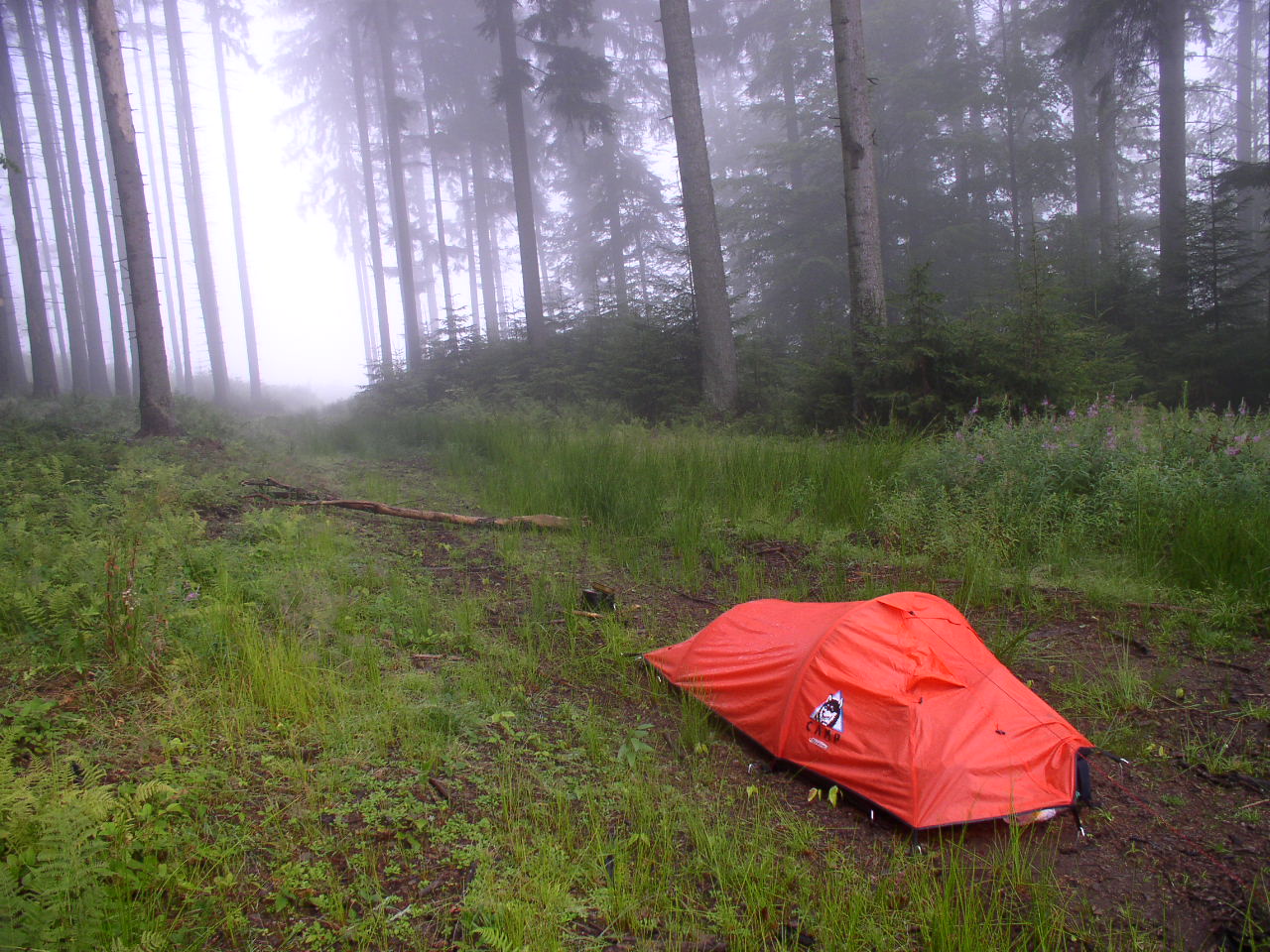
Record the narrowest practical opening and the usable space inside, accounting for hinges, wheel arches and other fixed obstructions. Do not assume that a bag which fits inside the compartment can pass through the opening in its packed form. Ask whether the manufacturer's stated dimensions include handles and the case. The photograph of a pitched family tent beside vehicles helps distinguish campsite scale from transport geometry: it provides no measurement for the bag hidden inside a car. Likewise, a low tunnel tent photograph cannot establish the length of its packed poles. Obtain the actual model data rather than estimating from appearances.
Compare a hypothetical bag with a hypothetical opening
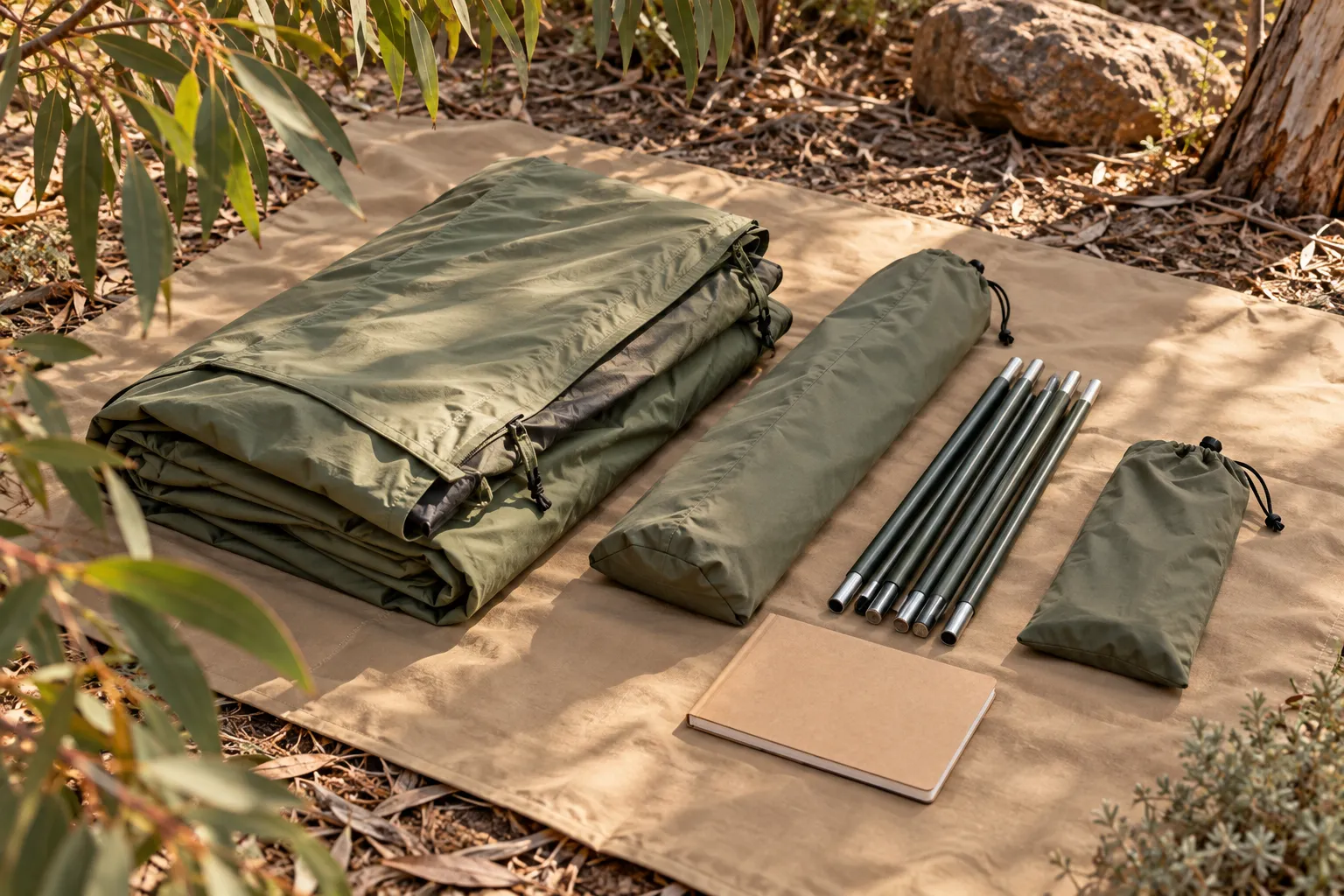
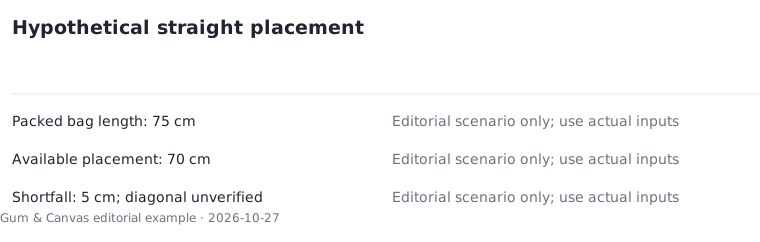
Suppose a packed tent bag is 75 cm long and the available straight placement is 70 cm. The simple comparison reveals a 5 cm shortfall. It does not prove a diagonal arrangement will work, because the opening, other dimensions and safe loading constraints remain unknown. Consider 2 separate bags if the model actually supplies them, recording both instead of counting only the largest. A planning check might reserve 10 minutes for measuring the vehicle and 15 minutes for a complete loading trial, giving 25 minutes as an illustrative allowance. Those times are not measurements of any vehicle or product.
Test the full kit rather than the tent in isolation
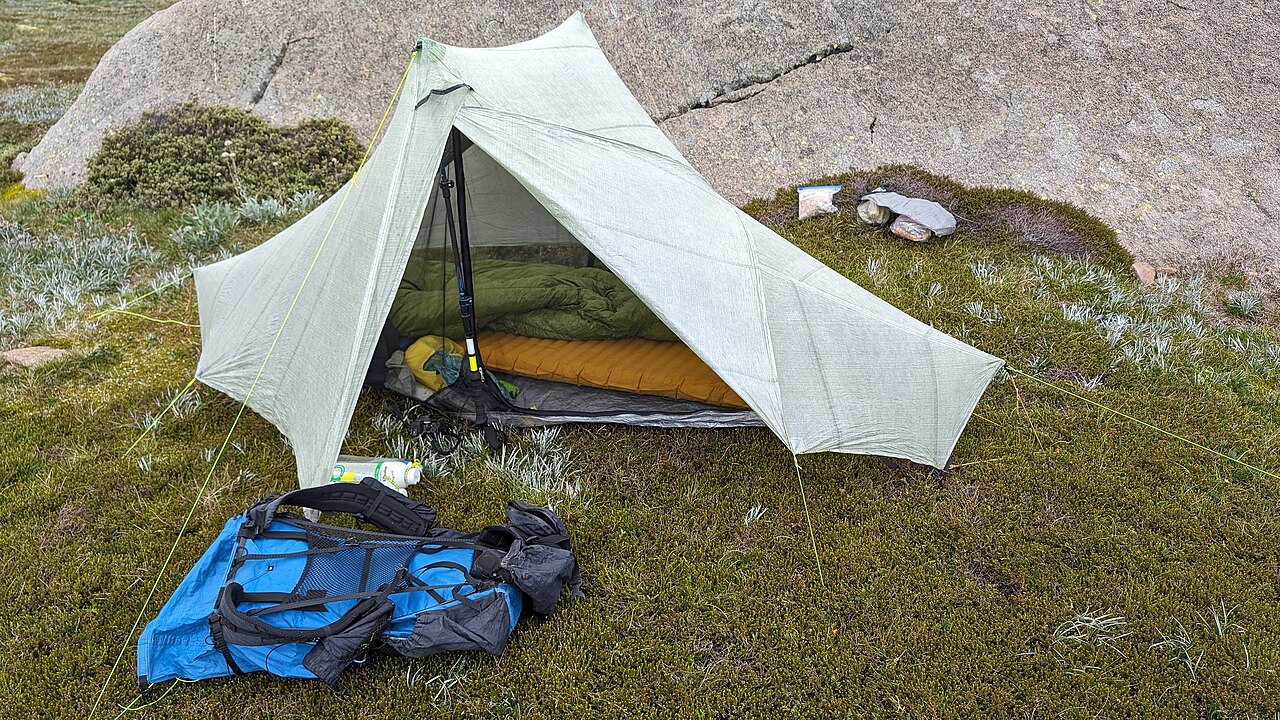
Include bedding, kitchen storage and every other item planned for the trip. Keep access needs in mind so the tent is not buried beneath equipment that must be unloaded first. The campsite kit photograph shows a backpack and bedding alongside the shelter, illustrating why a tent-only test leaves part of the packing problem unanswered. Do not sacrifice the vehicle manufacturer's loading, visibility or restraint requirements to make a preferred purchase fit. If the arrangement depends on compressing a component or bending poles beyond their instructions, treat it as unresolved rather than a successful fit.
Save the measurements with the shortlist
Write down the vehicle configuration used, including any seats that must remain available, and the exact packed model dimensions. Note whether the fit was measured, physically tried or merely proposed. If a retailer provides dimensions for a different size or revision, ask for the correct information before purchasing. A useful outcome is a complete load plan that can be repeated without improvised rearrangement at departure. If the preferred shelter cannot be transported under the applicable requirements, reconsider the model or trip arrangement. Do not let a favourable sleeping-capacity label hide an incompatible packed length or an inaccessible loading opening.