Pack existing gear before choosing backpack volume
Use the real kit and a permitted fitting trial to identify storage needs instead of copying a universal litre rule.
Updated:
Build the intended kit before choosing its container
Backpack volume is easier to discuss when the actual equipment is available. Lay out the kit for the specific trip and distinguish what you already own from what remains undecided. Parks Victoria's packing checklist, reviewed on 2026-10-27, provides a starting context, but it does not turn this article into a universal backpack-size recommendation. We have not tested packs or assessed individual fit. The objective is to prepare useful information for a fitting or retailer discussion. A capacity label alone cannot establish comfort, carrying suitability, attachment compatibility or whether every required item will be accessible.
Record packed shapes as well as item names
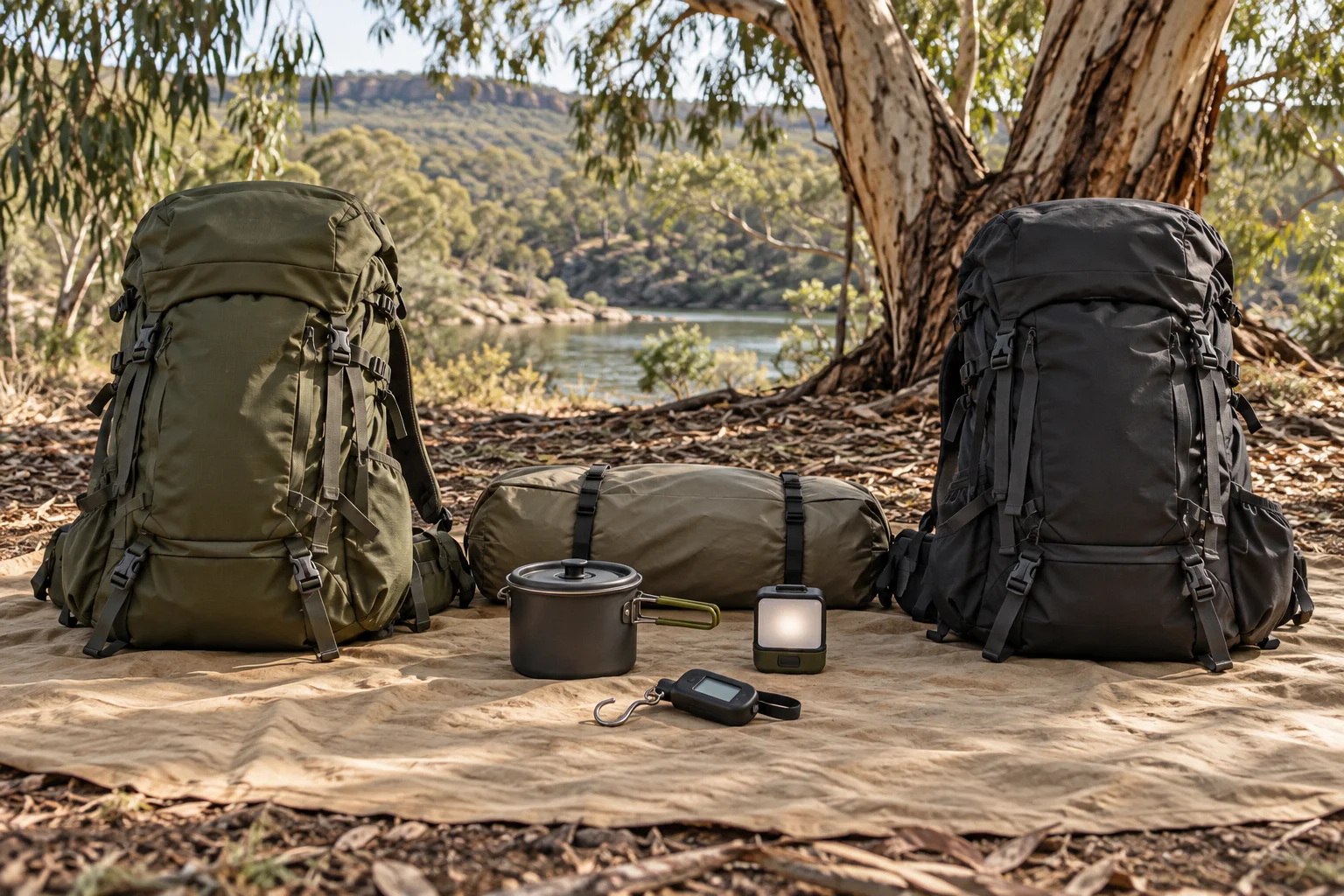
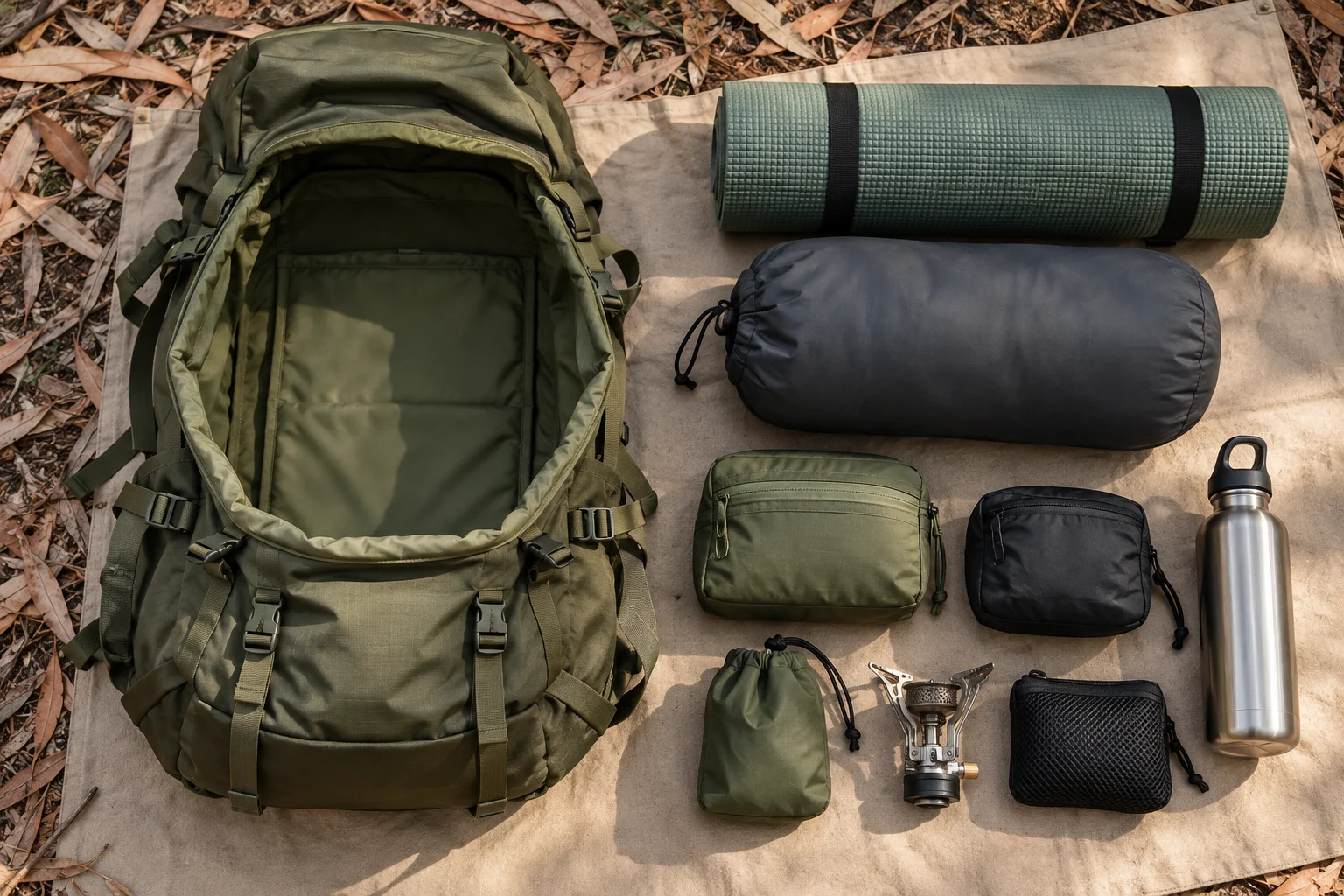
The campsite kit photograph includes a backpack alongside sleeping equipment, illustrating that separate objects must eventually form a workable arrangement. Measure or trial their actual packed forms according to the relevant instructions. A sleeping bag in its intended sack can occupy a different shape from an unpacked bag, and rigid components may constrain placement. Do not assume that equipment can be compressed, bent or attached externally without checking its requirements. Keep a list of undecided items because a later purchase can invalidate an otherwise useful trial. The pack decision should follow the known kit rather than hide unknown components.
Use a completeness count before a capacity estimate
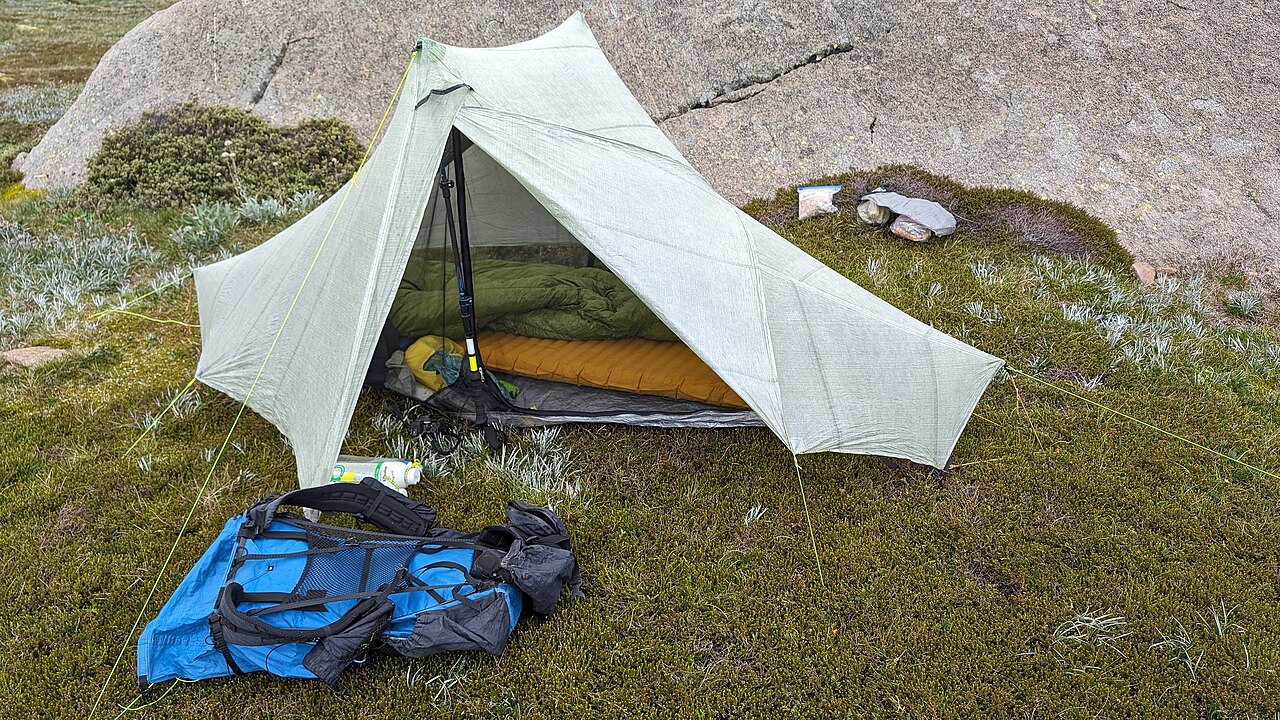
For a hypothetical inventory of 12 required kit entries, suppose only 9 are available for a fitting trial. The remaining 3 entries are unresolved inputs, so a successful trial of the nine does not prove the complete kit will fit. Record the missing items and obtain their packed information. An illustrative preparation schedule might allow 20 minutes for laying out equipment and 15 minutes for documenting the trial, totalling 35 minutes. Those are planning assumptions, not a fitting standard. Do not convert this example into a litre estimate or treat a partially filled pack as proof of spare usable capacity.
Check bulk and access with the intended user
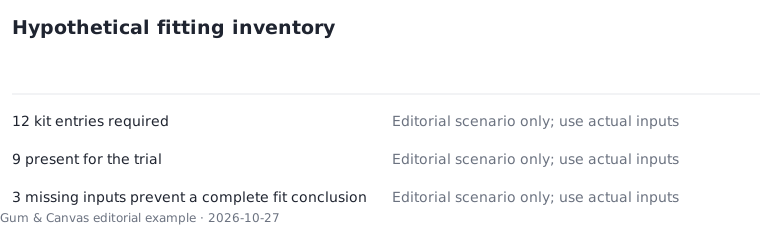
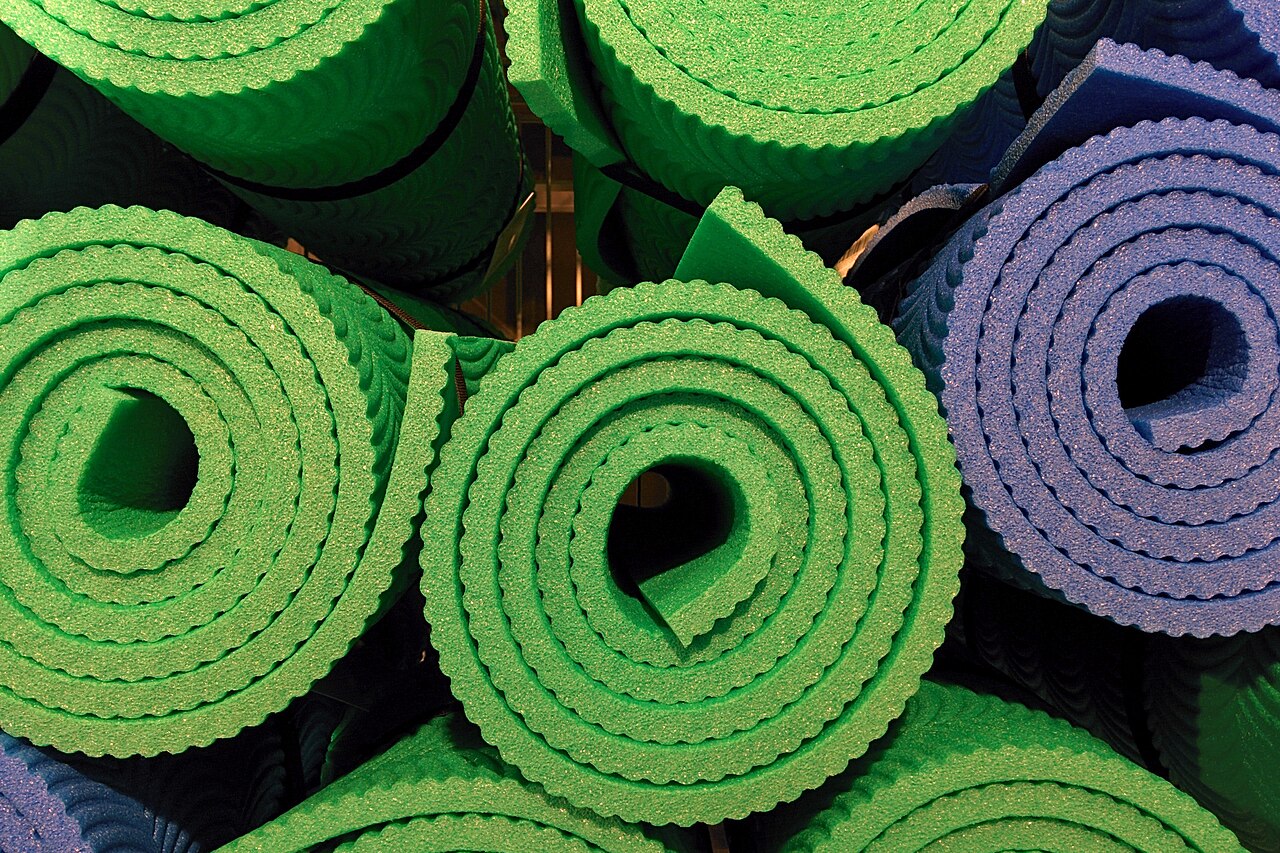
The rolled foam mats photograph shows a bulky shape that can matter to packing independently of mass. Ask a knowledgeable retailer about the actual pack and intended use, and follow its instructions for loading and permitted attachments. Review access to items you expect to need without emptying the whole pack. Individual fit and carrying requirements deserve their own assessment; this guide supplies no safe-load percentage or universal torso adjustment. A trial can reveal a poor arrangement, but it should not be presented as a guarantee of comfort over a route or under conditions that have not been evaluated.
Close the small-item gaps before buying
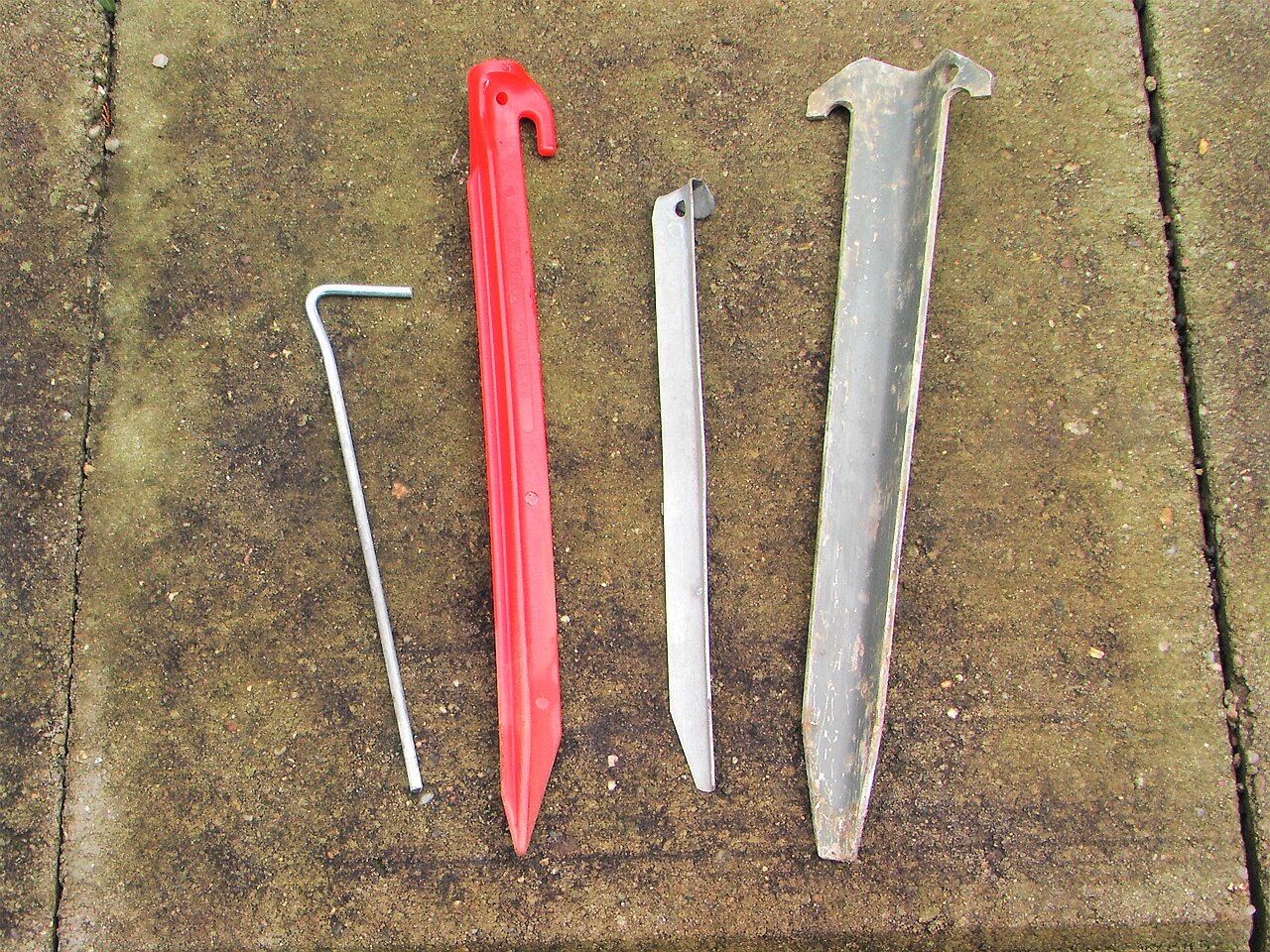
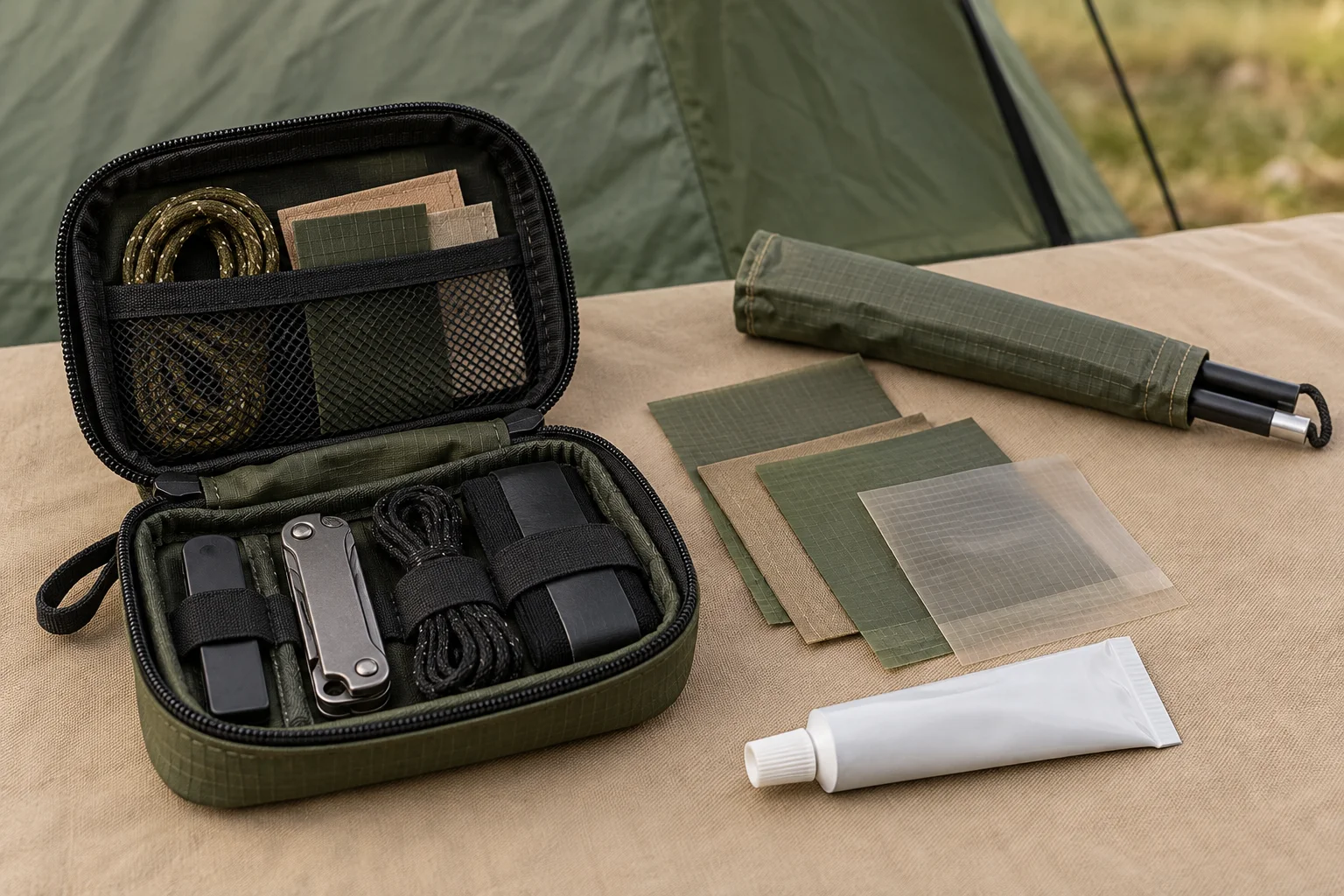
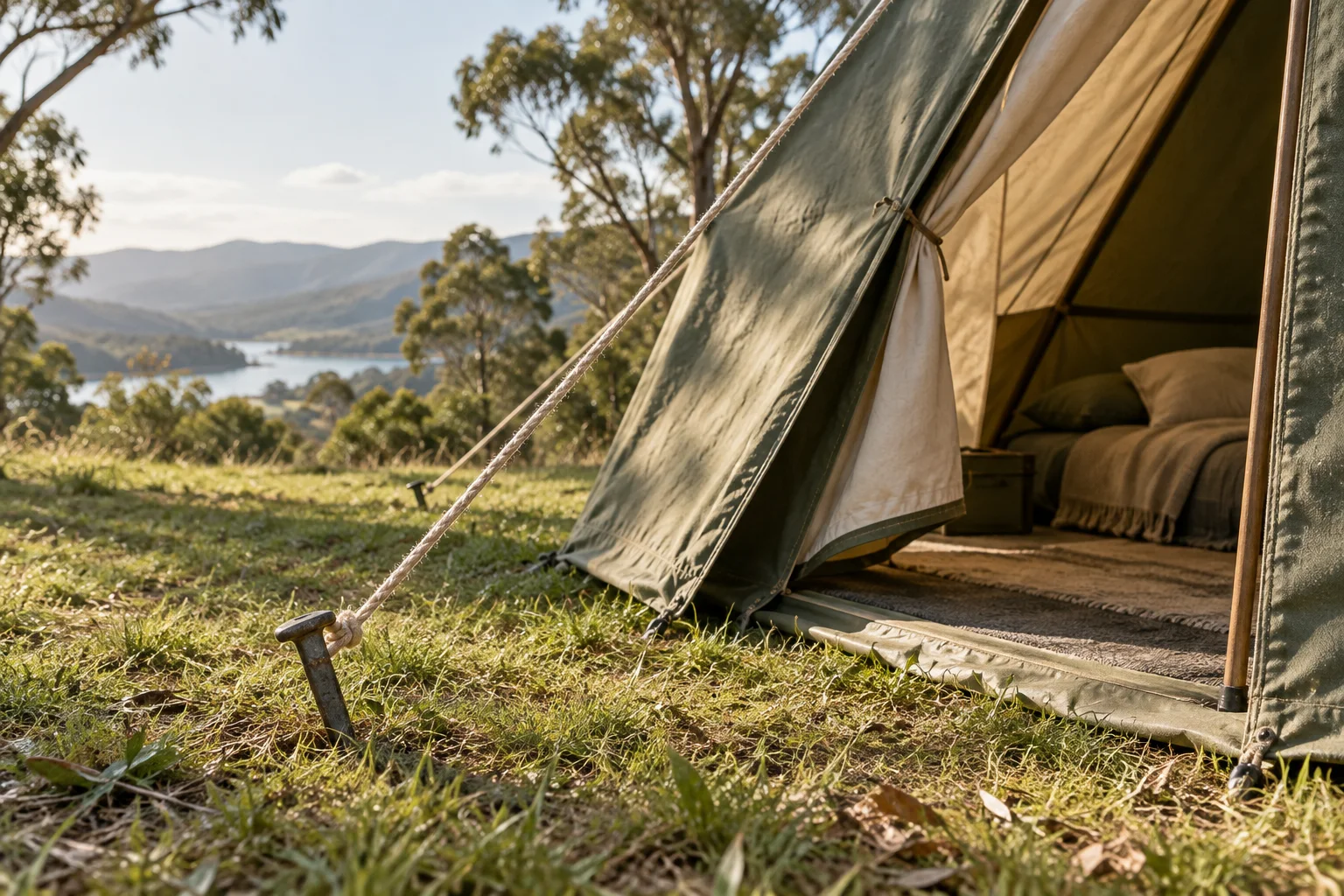
The peg photograph illustrates small components that are easy to omit from a visually impressive layout of the largest items. Reconcile the final inventory, including cases and accessories that will actually travel. Record what was tried, which pack model was involved and which assumptions remain. If the complete arrangement does not work, reconsider the kit or obtain further fitting advice rather than automatically choosing the largest advertised capacity. The useful result is an informed shortlist based on actual equipment and a documented trial. It is not a promise that one volume category suits every overnight trip, person or camping style.