Split shared kit by measured weight, not item count
Use an item-by-item allocation to reveal unequal shared loads without prescribing a safe carrying weight.
Updated:
Weigh the items that will actually be carried
Counting shared objects can hide a large difference in the load assigned to each person. Start with the actual packed items and record their measured masses in a consistent unit. Parks Victoria's camping checklist, reviewed on 2026-10-27, provides the equipment context; the allocation method here is an editorial arithmetic exercise. It does not recommend a safe carrying weight, assess a person's capability or establish whether a route is appropriate. Use the shared-load tool to total your own entries, then consider the wider trip and individual requirements separately. A balanced spreadsheet is not evidence that either pack is suitable.
Define what belongs in the shared inventory
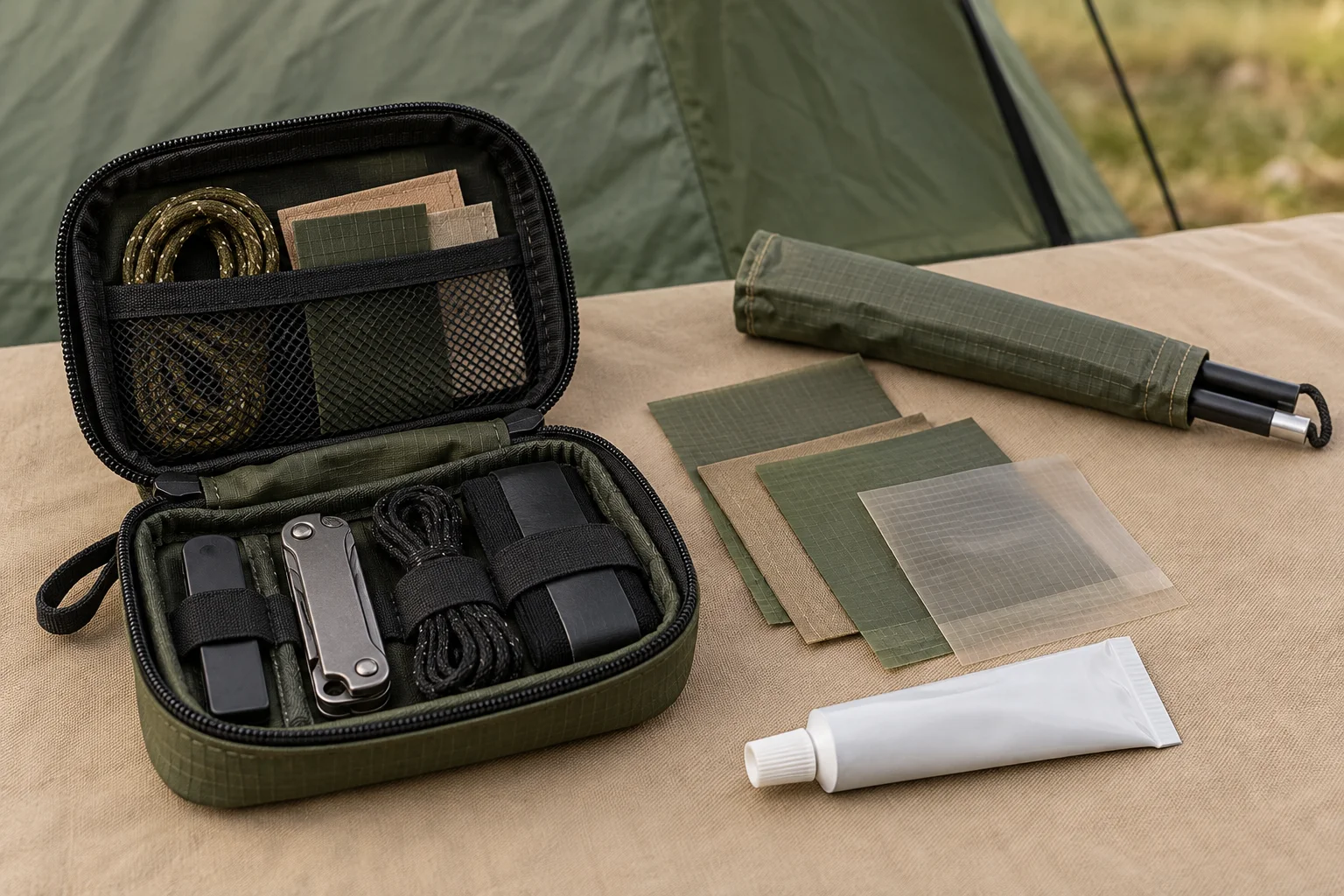
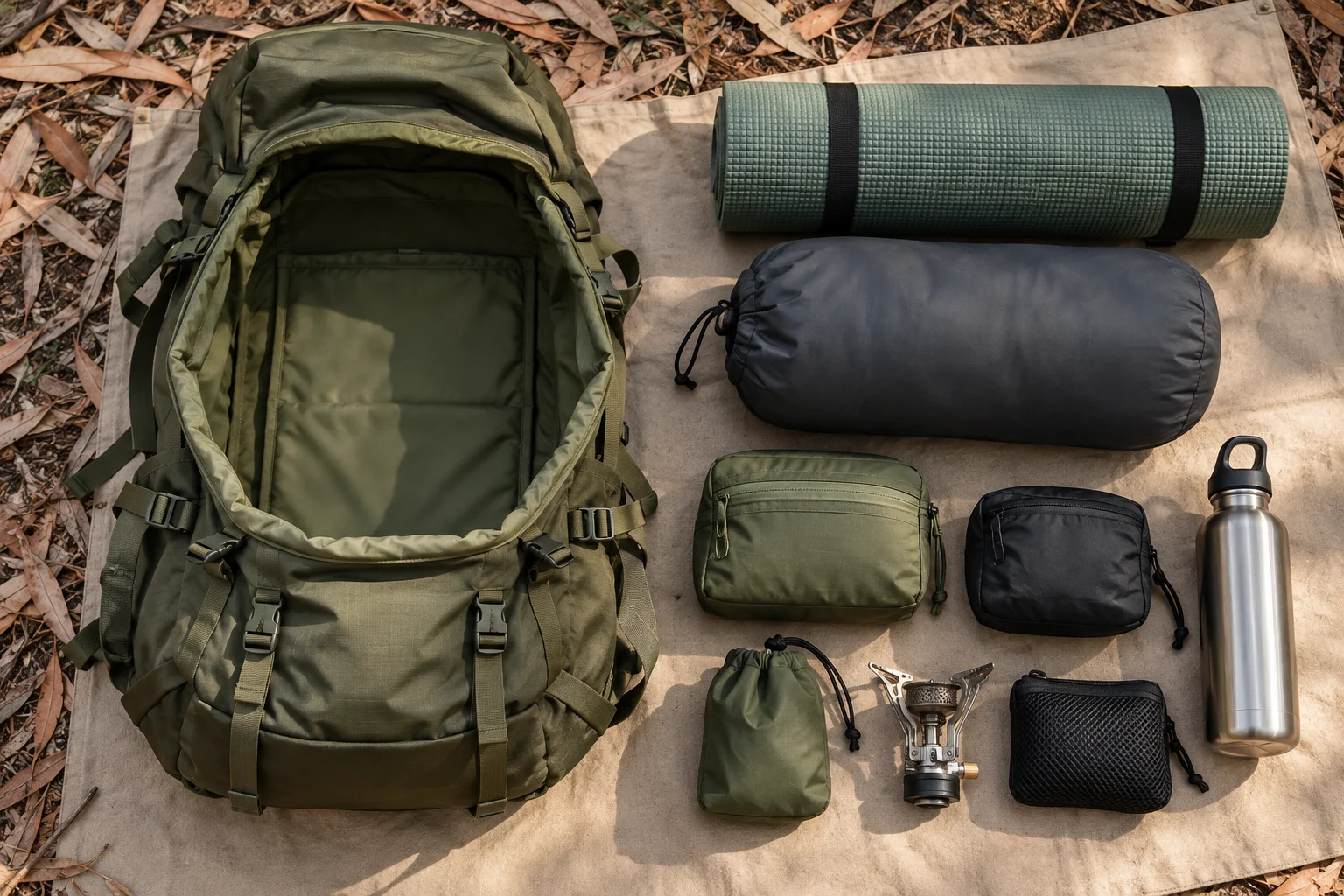
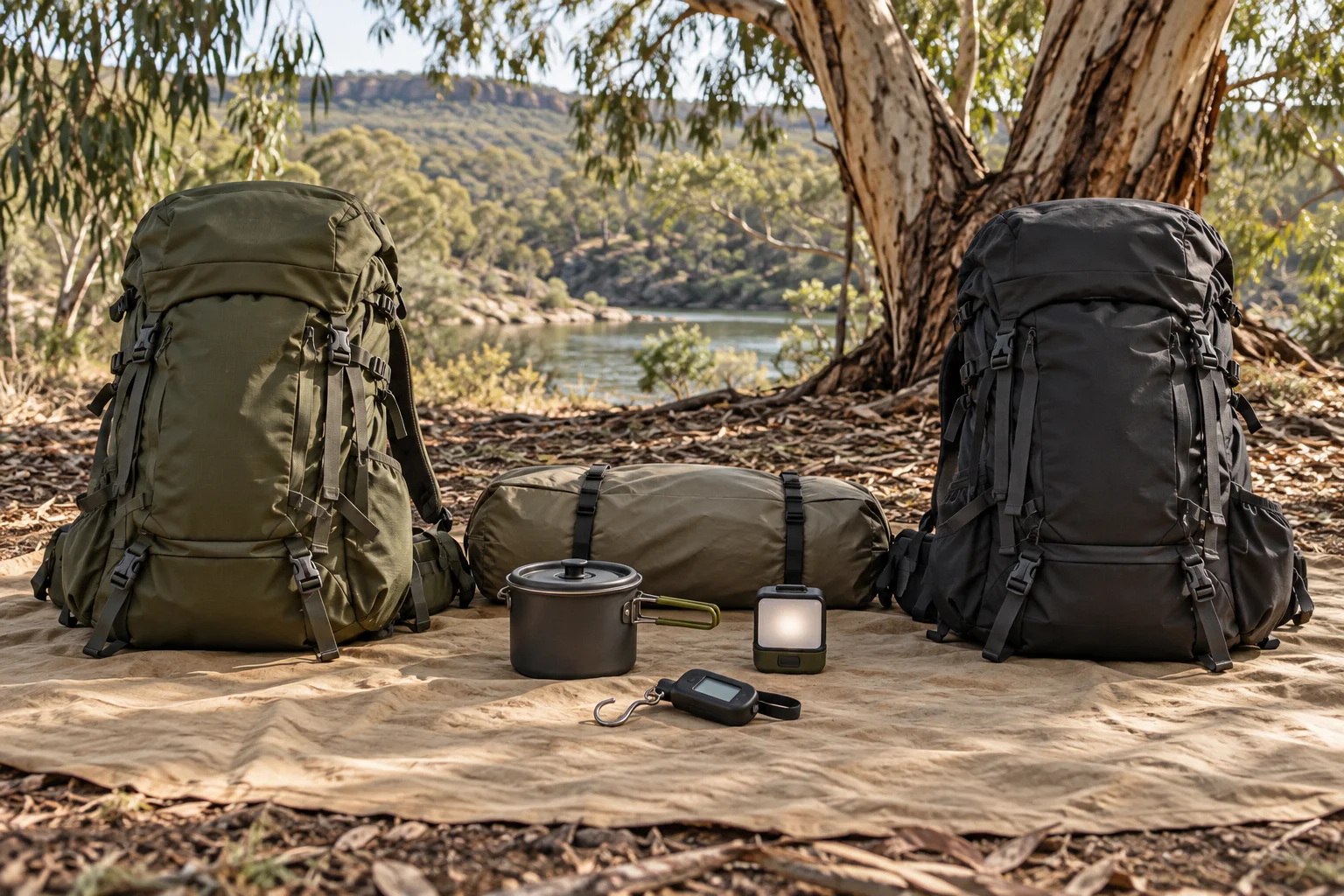
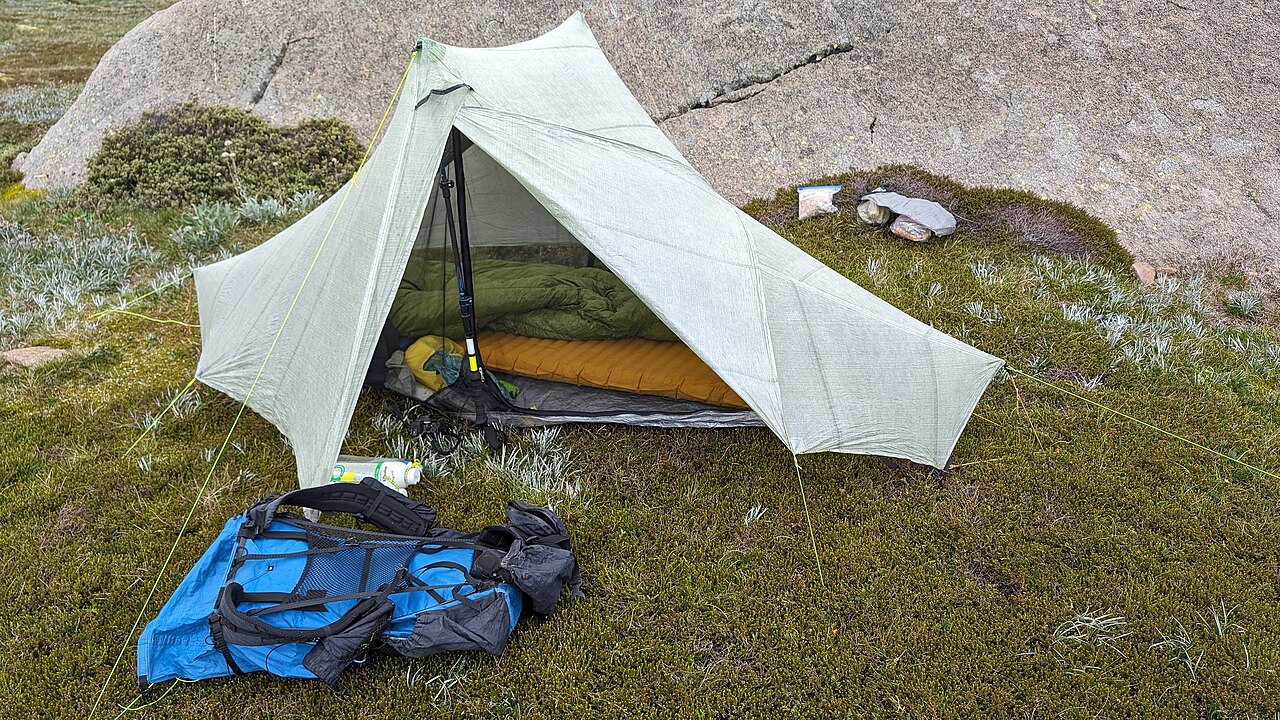
Agree which items are shared and which remain personal. The campsite kit photograph shows a tent, sleeping bag and backpack together, but those objects do not automatically belong to the same allocation category. Record the packed component actually being weighed, including its case or accessories where they will be carried. Avoid mixing a manufacturer's bare-item specification with another item's measured packed mass without noting the difference. If the tent can be separated only in a manner allowed by its instructions, record those components clearly. Do not create an apparently even split by omitting a necessary part from the inventory.
Work through a transparent two-person example
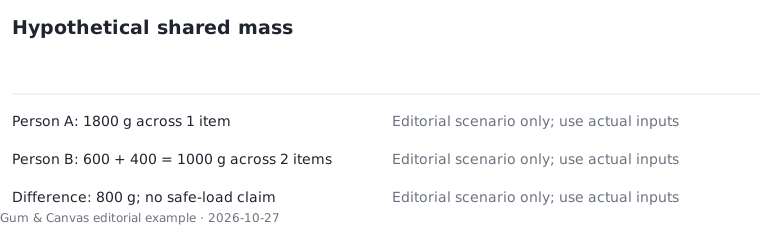
Imagine 3 shared items with hypothetical masses of 1800 g, 600 g and 400 g. Assigning the first item to person A gives 1800 g; assigning the other two to person B gives 1000 g. The difference is 800 g even though A carries only 1 item and B carries 2. This example demonstrates the weakness of item counts, not the correct allocation for real people. Allow an illustrative 15 minutes for weighing and 10 minutes for discussing assignments, totalling 25 minutes of planning time. Use measured inputs for your own kit and keep each assumption visible.
Include the awkward shapes in the conversation
The rolled foam mats photograph shows why an item can be bulky even when its mass is modest. Review volume, access and compatibility with the actual pack as well as the arithmetic total. The shared-load calculator does not model balance, attachment strength, pack fit or fatigue. Follow the relevant equipment instructions and seek suitable advice when the activity or individual circumstances require it. Do not move an object between people simply to equalise a number if doing so creates an unsuitable packing arrangement. The practical discussion should include who needs access to the item and how the group will remain organised.

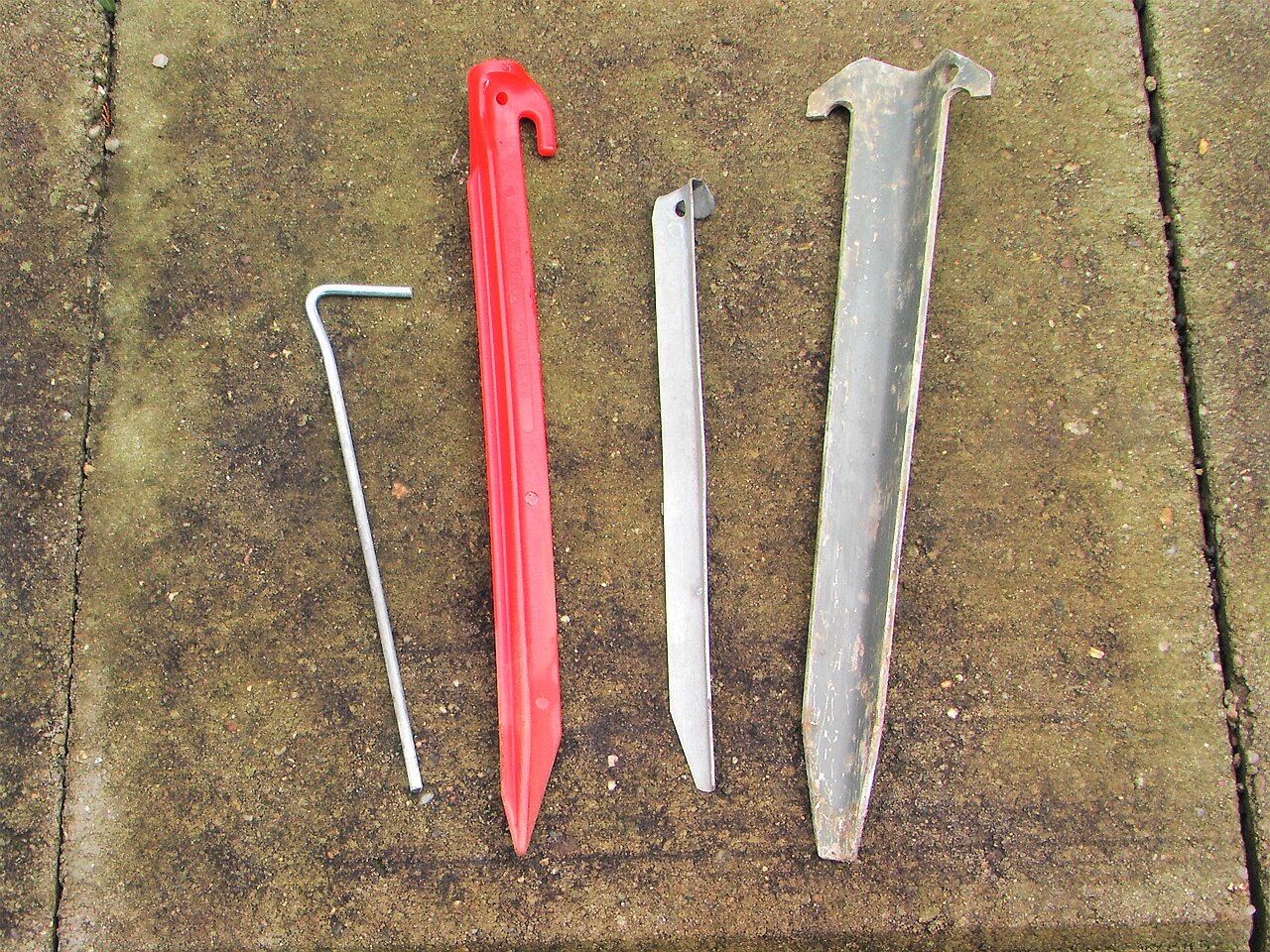
Audit the complete load before deciding the allocation
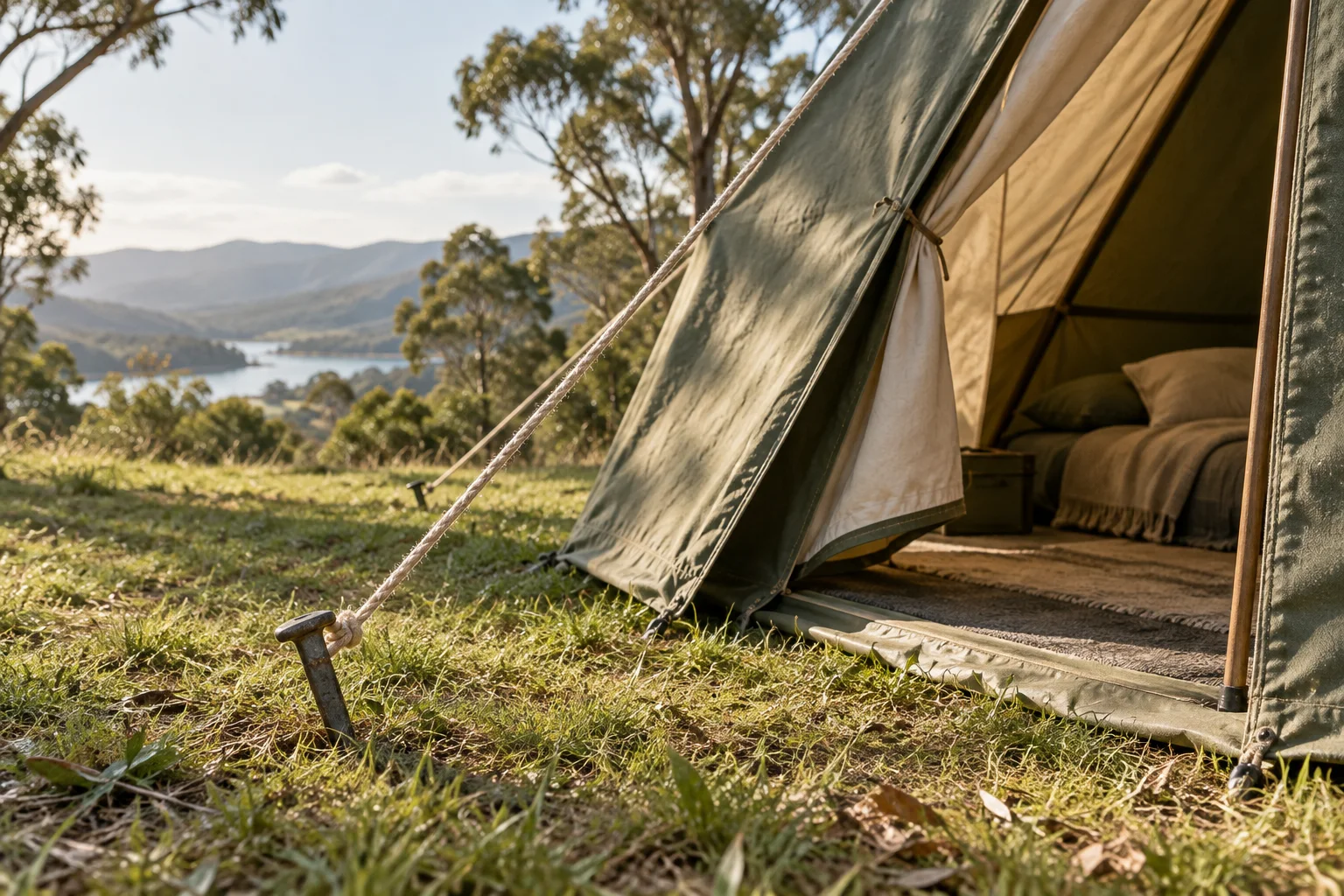
The peg photograph illustrates small components that can be overlooked when only the largest shared items are counted. Check that the inventory includes the components actually needed, then review personal equipment, water and consumables separately. Record the agreed assignment and update it after any change. A useful final note states the measured shared totals and their limits, rather than calling them a safe or fair load without further context. If the complete arrangement is unsuitable for a participant or the planned trip, change the plan or equipment. Arithmetic can reveal a discrepancy; it cannot settle every carrying decision for the group.